This city is so big that it took us several days to certainly not go around, but to see its contours and its limits.
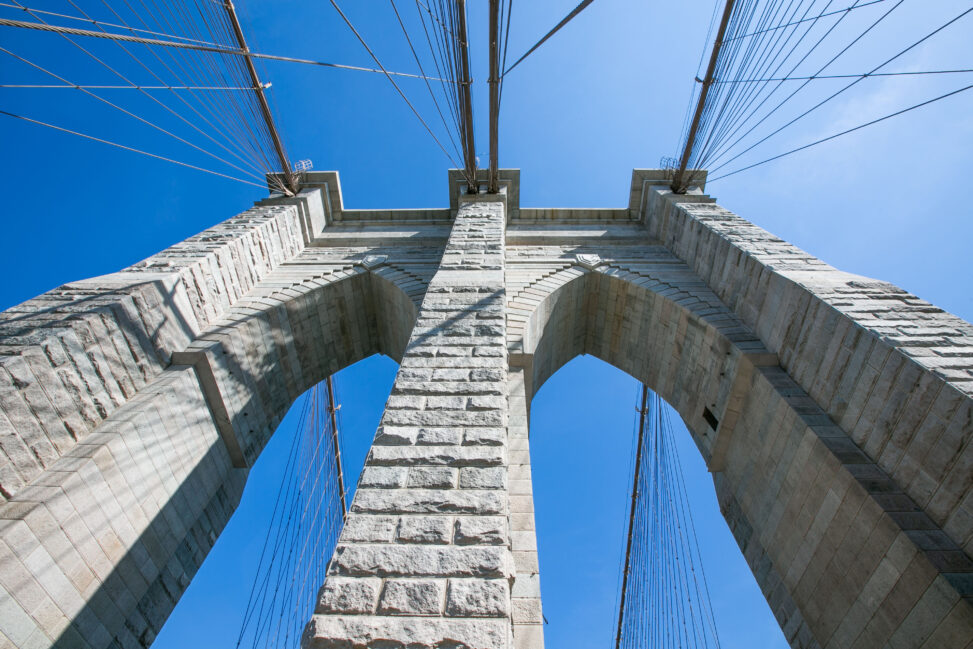
We continued our visit with the discovery of the Brooklyn Bridge. Bridge famous all over the world by the history of its construction which has experienced quite a lot of adventures and its characteristic silhouette.
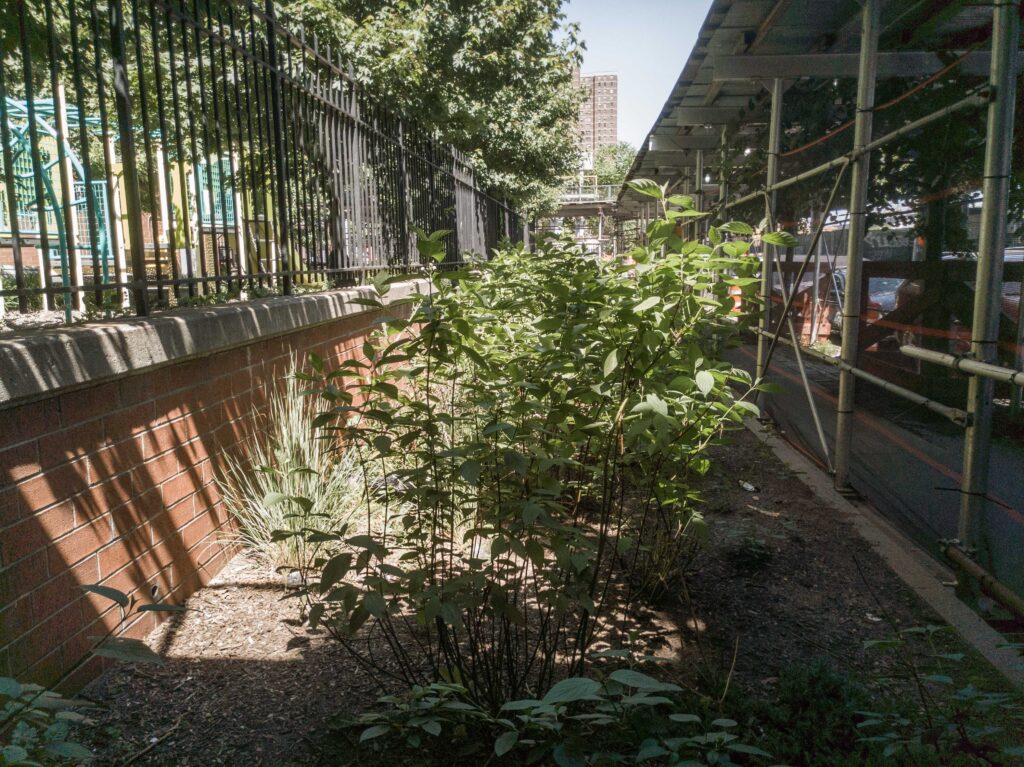
Before crossing this mythical bridge, let's go back to the detour we made to get there. One of the objectives of our visit to New York was to get an overview of the initiatives and technical advances in parks for adapting the city to climate change. For this purpose the city has set up a website with a presentation of its parks, as well as an interactive map of the actions and projects carried out in the territory. Many of these actions concern the dewatering of coatings to promote water infiltration. We had found a more vegetal achievement, which corresponded to our journey. This rain garden is located close to a school parallel to the road.
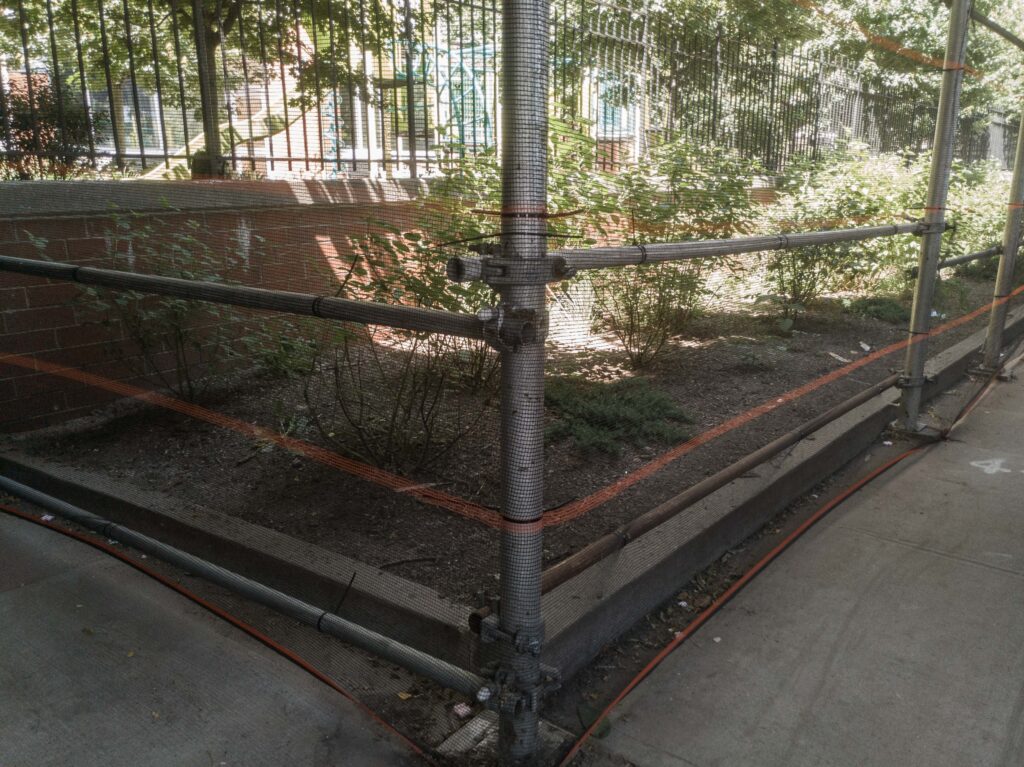
Before describing what we saw, a little explanation of what a rain garden is. This is an urban, vegetative development which aims to recover runoff water. These waters irrigate the plants, which in return refresh the ambient air in case of high heats. The difficulty in this type of development is to find plants that are able to survive with very important soil moisture amplitudes (this is one of the main objectives of our project). To sum up, winter soil can be engorged and summer completely dry. The position of these structures is calculated according to the topography of the terrain and must be able to collect a maximum of water. These spaces may be surrounded by borders on a part of their periphery, but at least one side must be at the same level as the flow of water. This small precision is important to understand the description of the work we have seen.
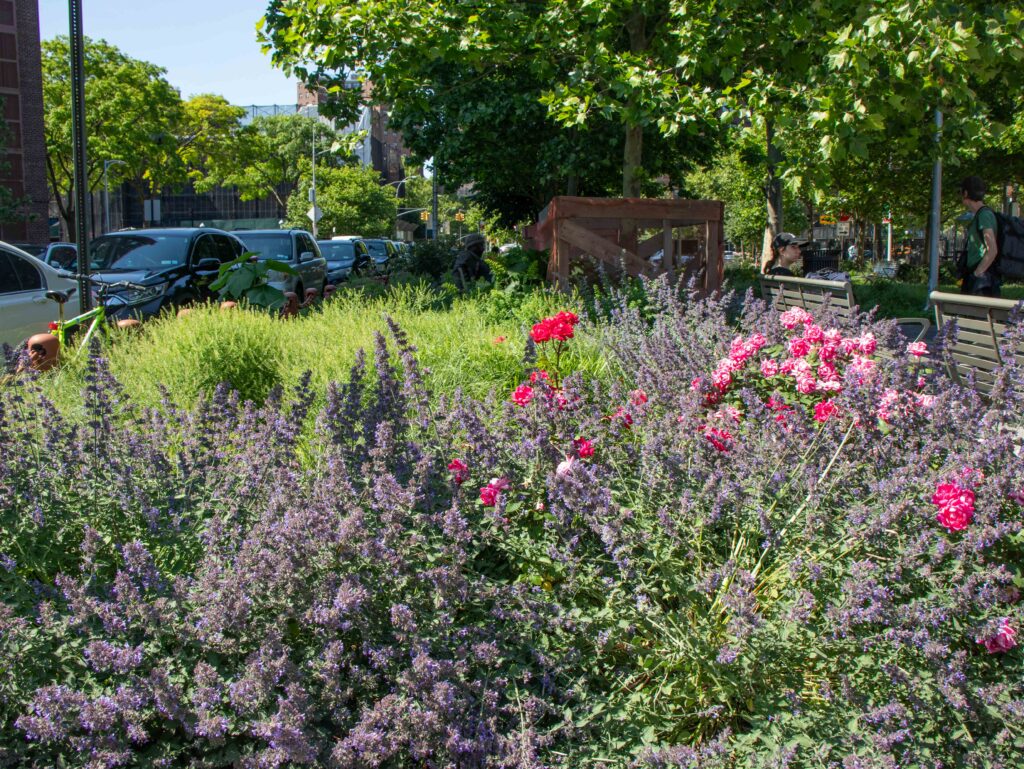
We got there after a bus trip through Chinatown. We walked a good time under heavy heat, before arriving in front of the structure which was in the end only a simple raised massif composed of a few shrubs. So much so, tell you that Elina, our daughter, didn't really enjoy the joke. All for that! The work we have seen does not really distinguish itself from other massifs and does not justify its name as a rain garden. The communication may have been exaggerated on that occasion. We are not going to generalize this to the entire city of New York, but it is true that we were disappointed by it.
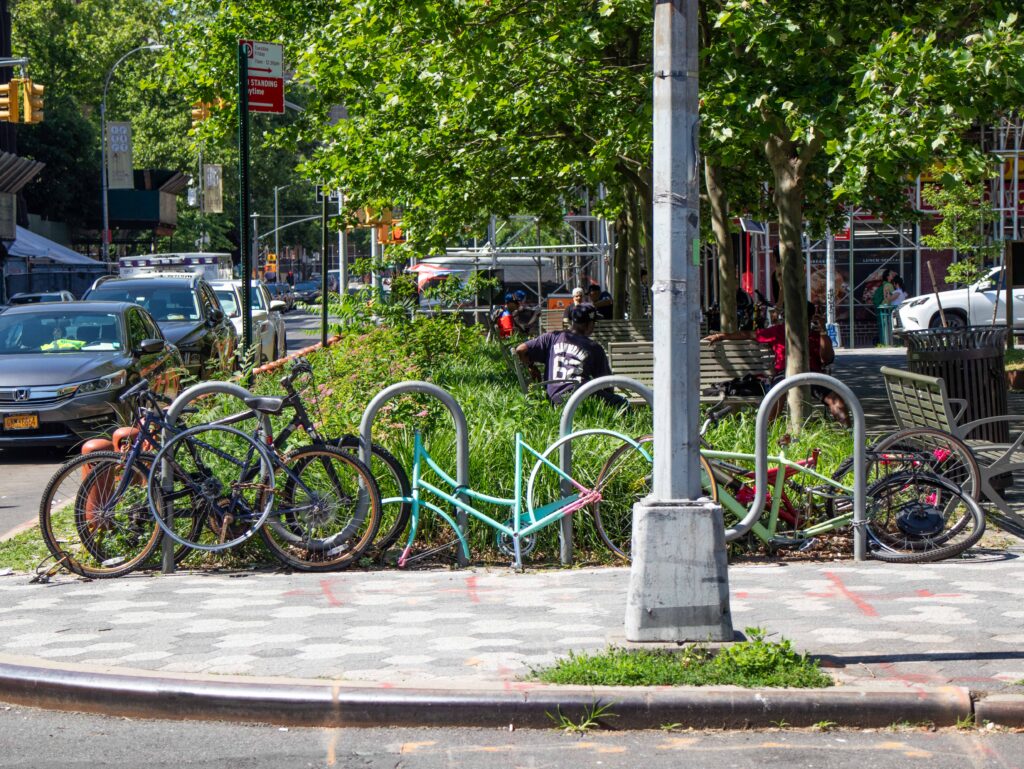
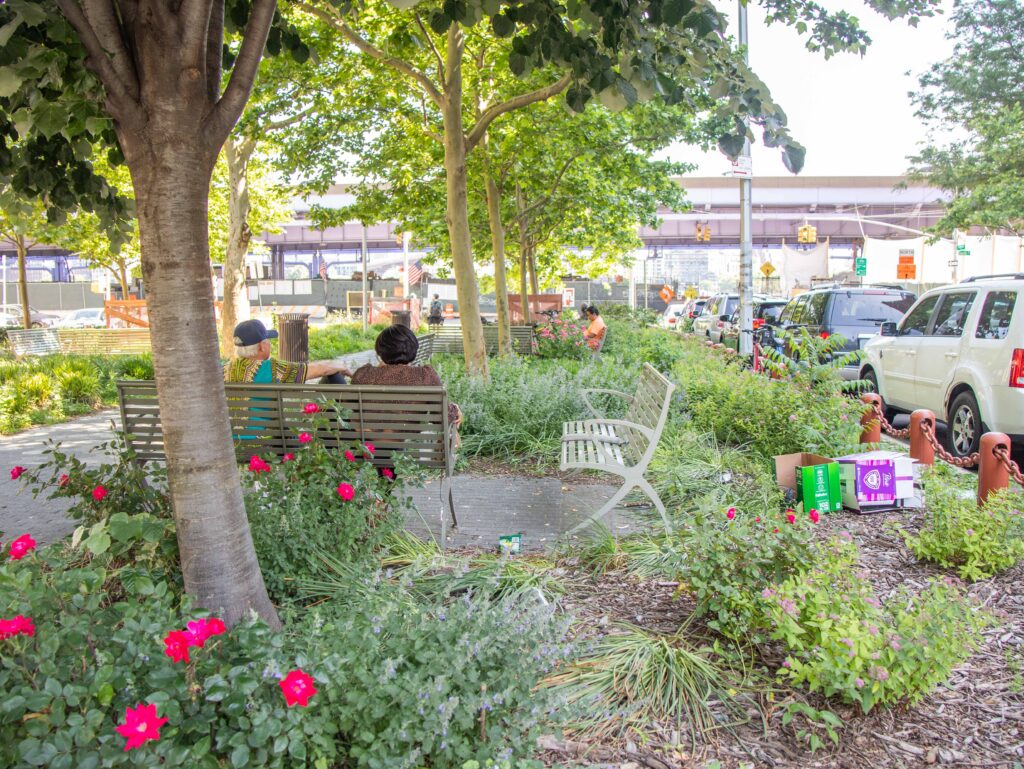
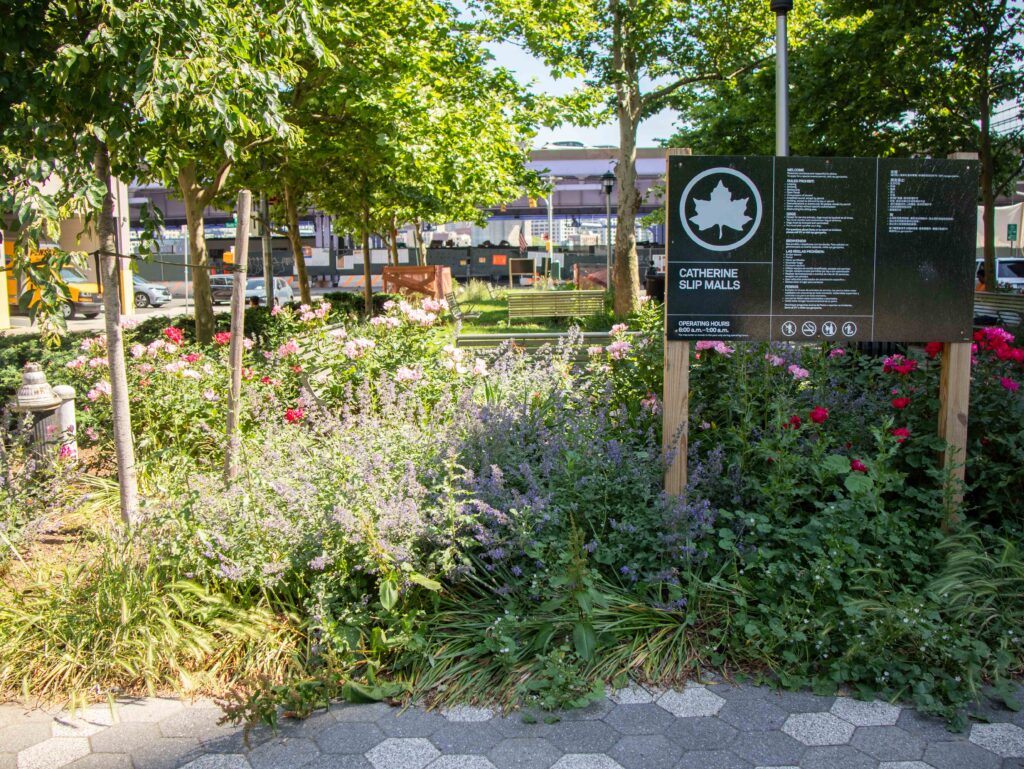
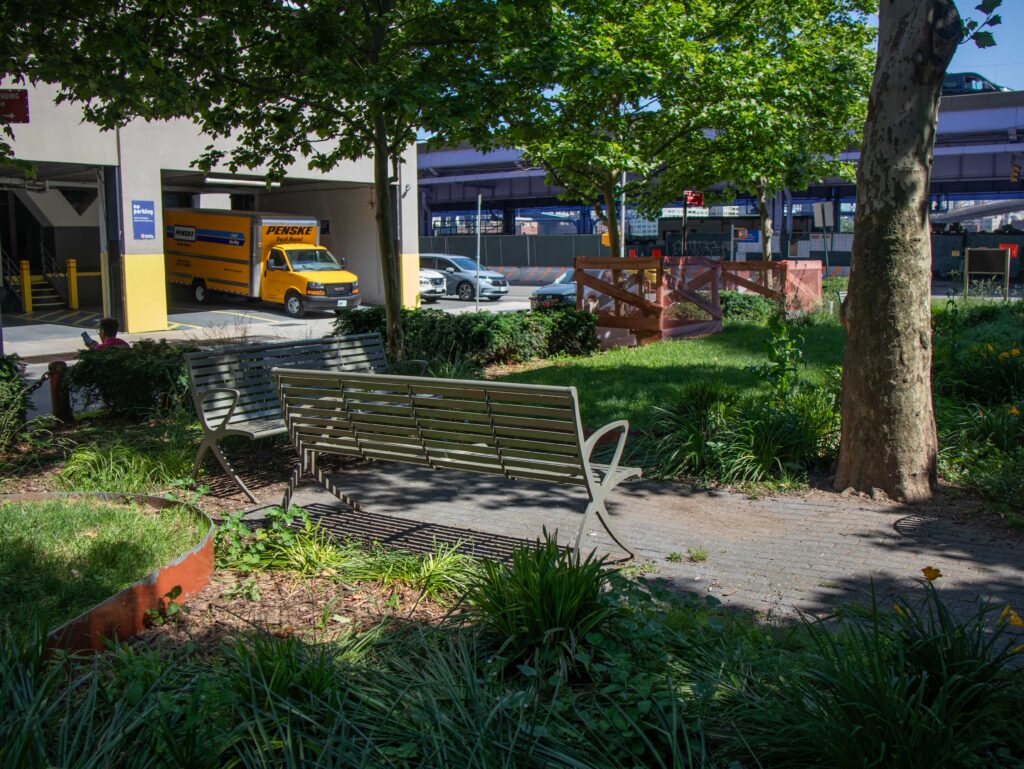
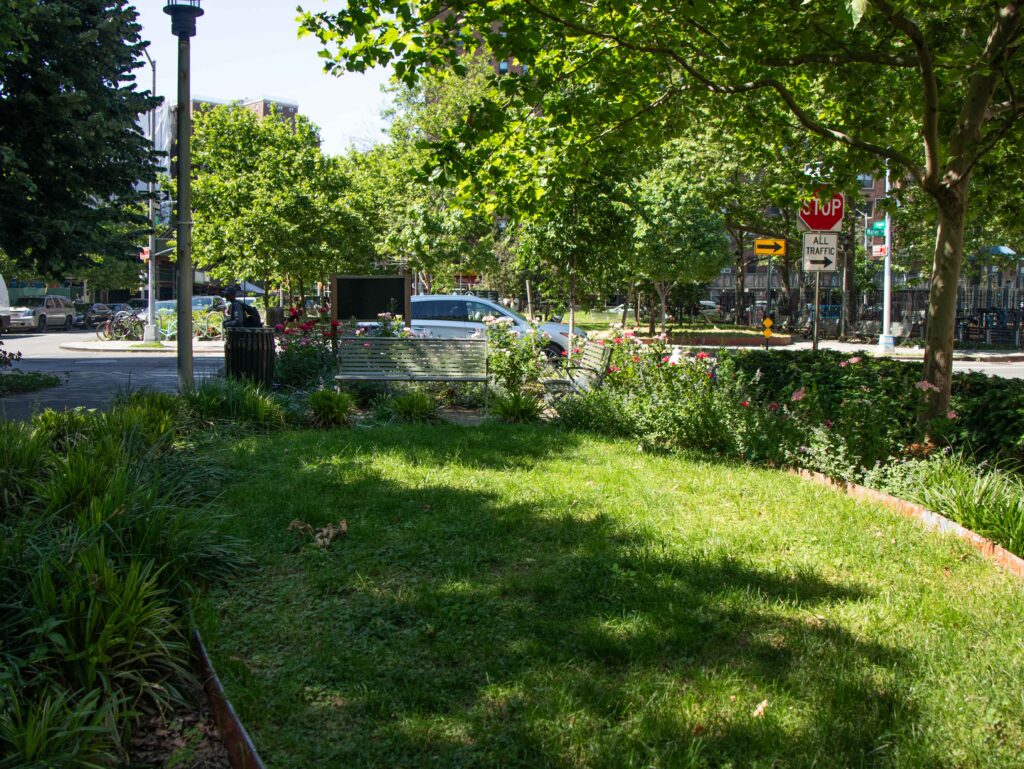
We continued our walk to the Brooklyn Bridge following the East River and we stumbled upon a small park that did not appear on the map and that we found much more interesting: more impact in terms of water recovery, more plant diversity and more well-being felt.
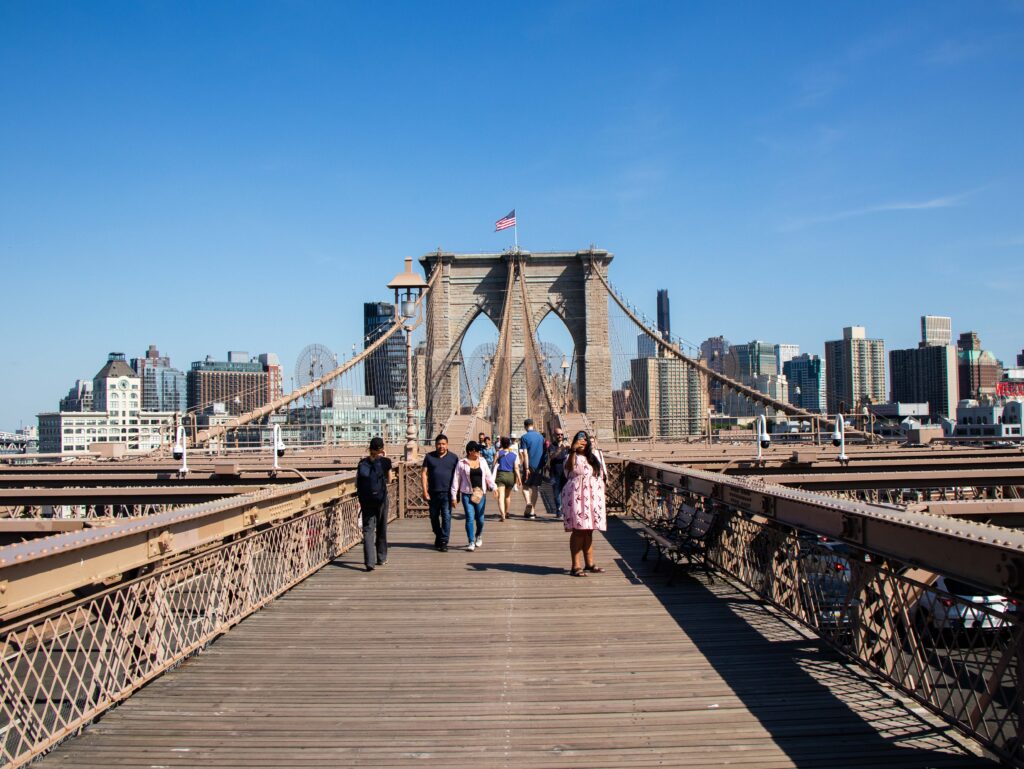
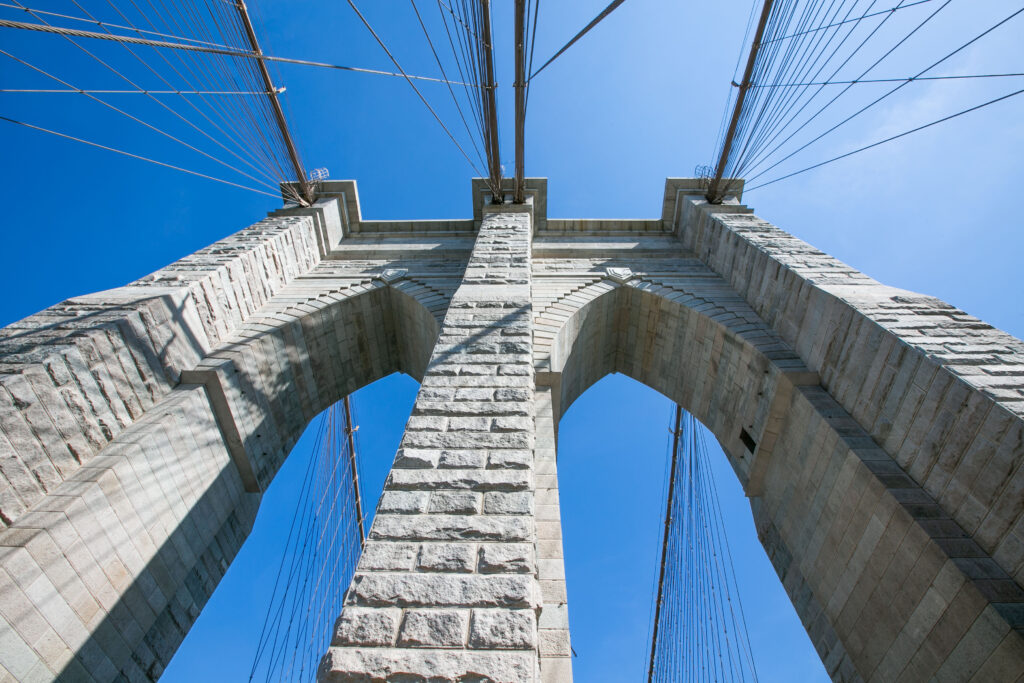
Let's continue our journey to this famous bridge. It can be seen from a distance and it is true that it is impressive with these large stone pillars and metal stubs. Before that bridge, the connections between Brooklyn and New York, which were then two separate cities, were made by ferry. To facilitate and secure movement and to allow vehicles to access everywhere, the construction of a bridge was activated. Its construction was entrusted to the German architect John Augustus Roebling. Unfortunately for him he lost his life on the construction site. The continuity of the site was ensured by his son Washington, but in 1872 he suffered from discomfort caused by the decompression of the caissons necessary for the construction of the bridge. It was Emily Warren Roebling, Washington's wife, who replaced him on the site to give instructions.
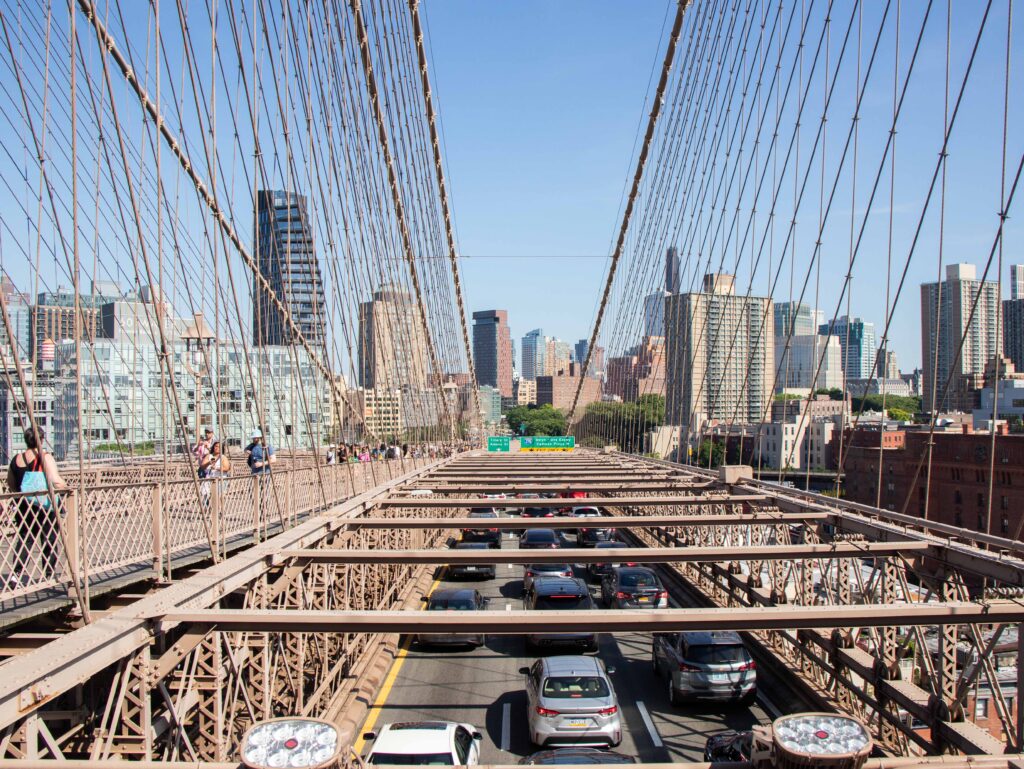
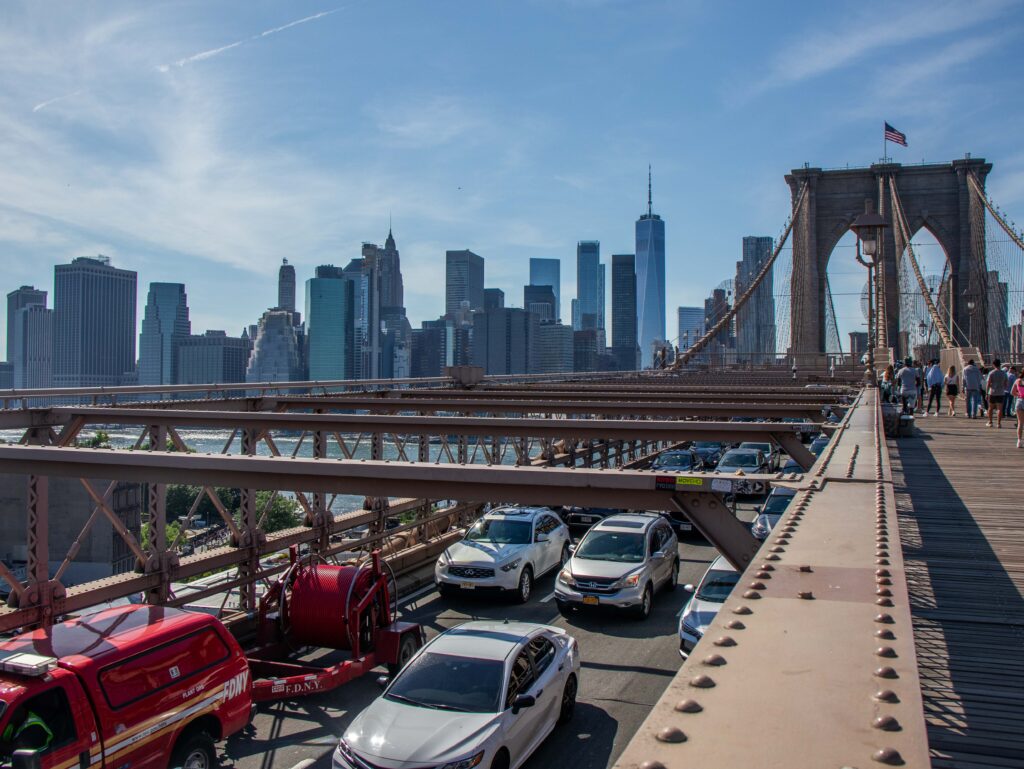
The bridge was inaugurated on May 24, 1883. The work lasted 14 years and cost more than $15 million. It's a beautiful achievement. It was at the time of its construction the largest suspended bridge. The Brooklyn Bridge was used by horse cars, trolleys, trains and trams until 1950. It is now divided into six lanes for motor vehicles, but for reasons of speed and weight, trucks and buses are prohibited.
In the centre, an elevated crossing is reserved for pedestrians and cyclists. It's a reserved lane so you can cross the bridge without worrying where you walk, but the sensation can be oppressive because you're right above the cars so you still enjoy the exhaust gas and the vacarm of the traffic.
This bridge is famous, you can imagine that we weren't the only ones who thought it would be nice to cross it. It is a very touristic place in New York. This is explained by the bridge itself and also by the view of Manhattan that it offers when crossing it. So we crossed it, still under the sun, to reach the other side of Brooklyn Bridge Park. (It's true, they didn't go too far for the name.) By the way, an ice merchant cut us off and this little refreshment was welcome. The park was not unusual in itself, but it is a beautiful island of freshness for locals who can come and enjoy the green lawns while admiring the view of Manhattan skyline. As a comparison for those who know, it sounds like Trentemoult, but on the American scale.
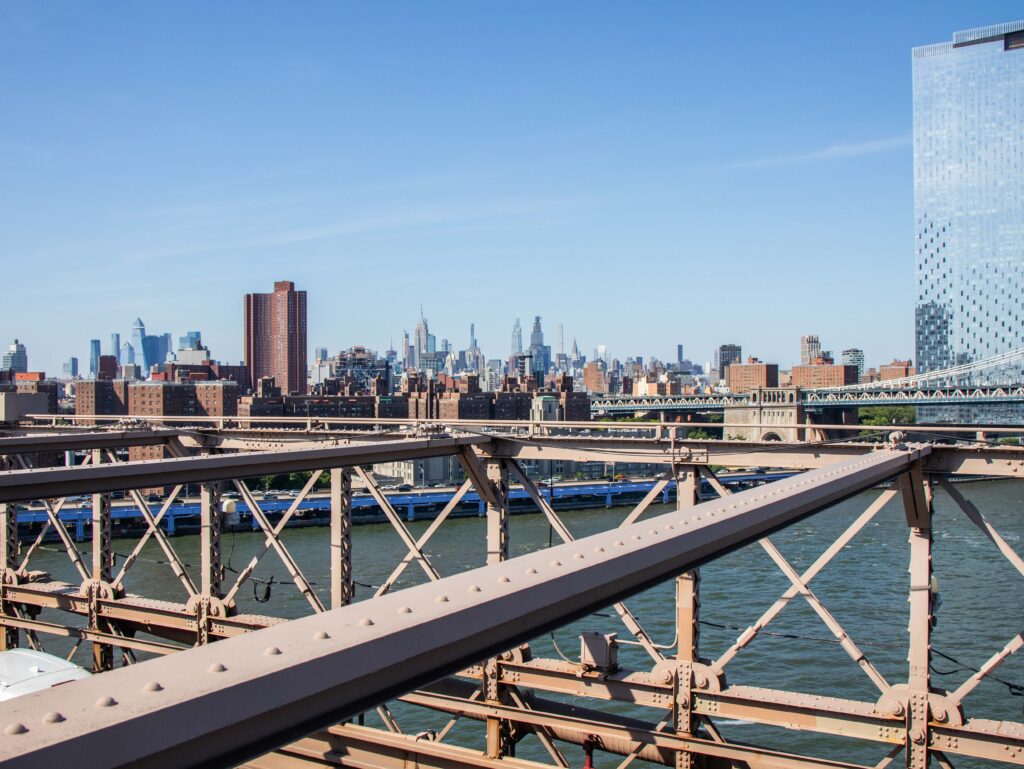
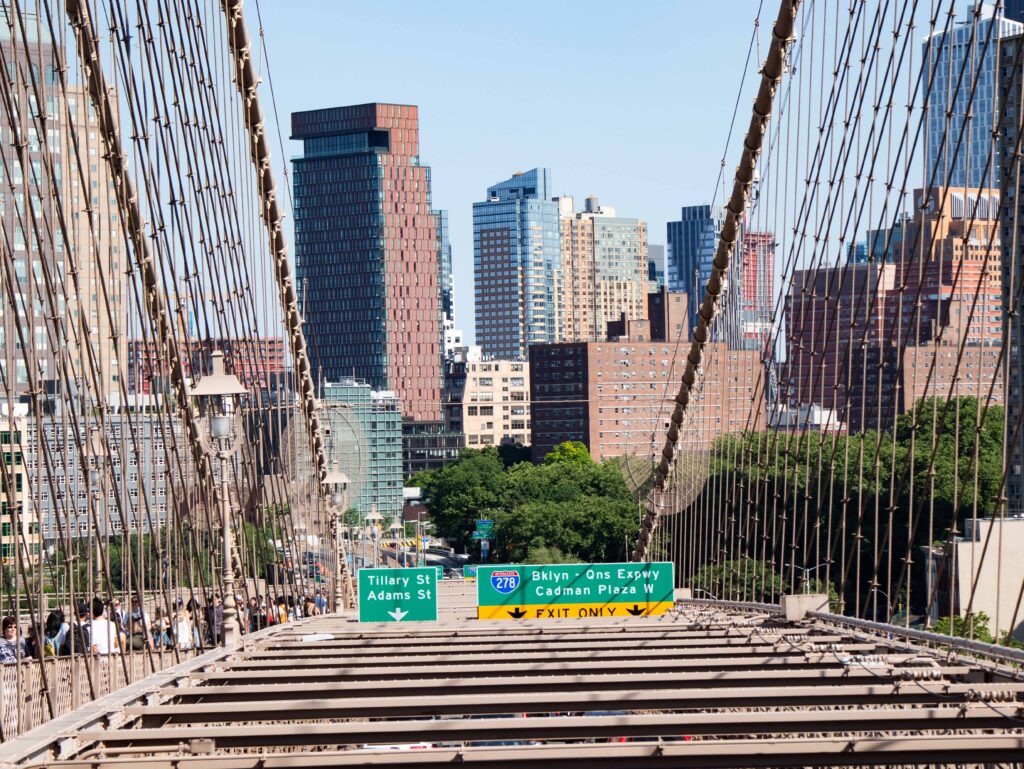
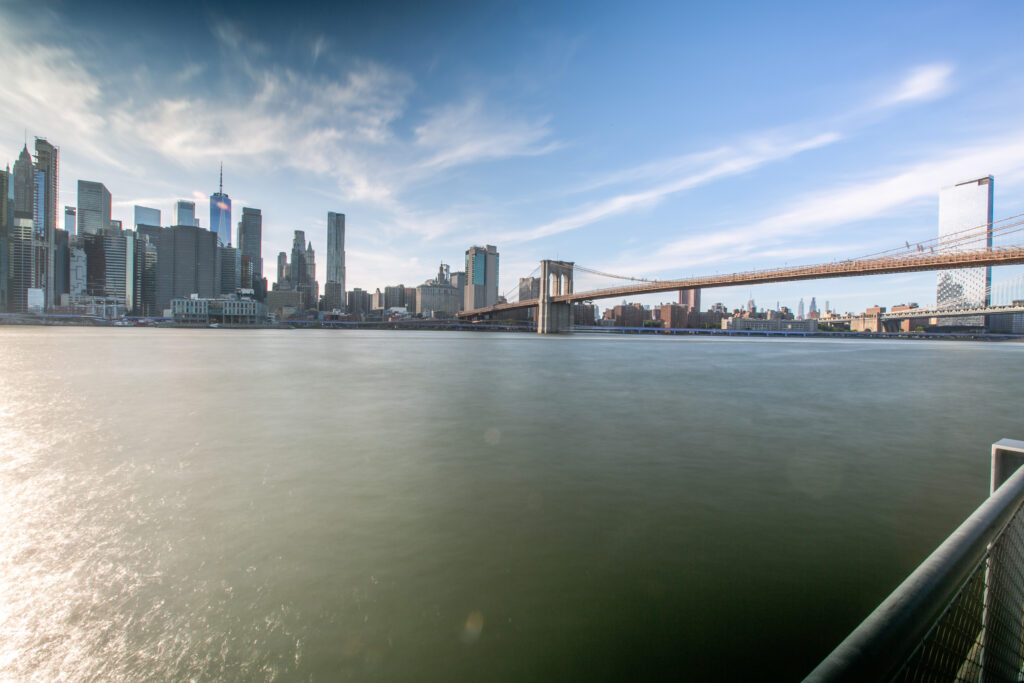
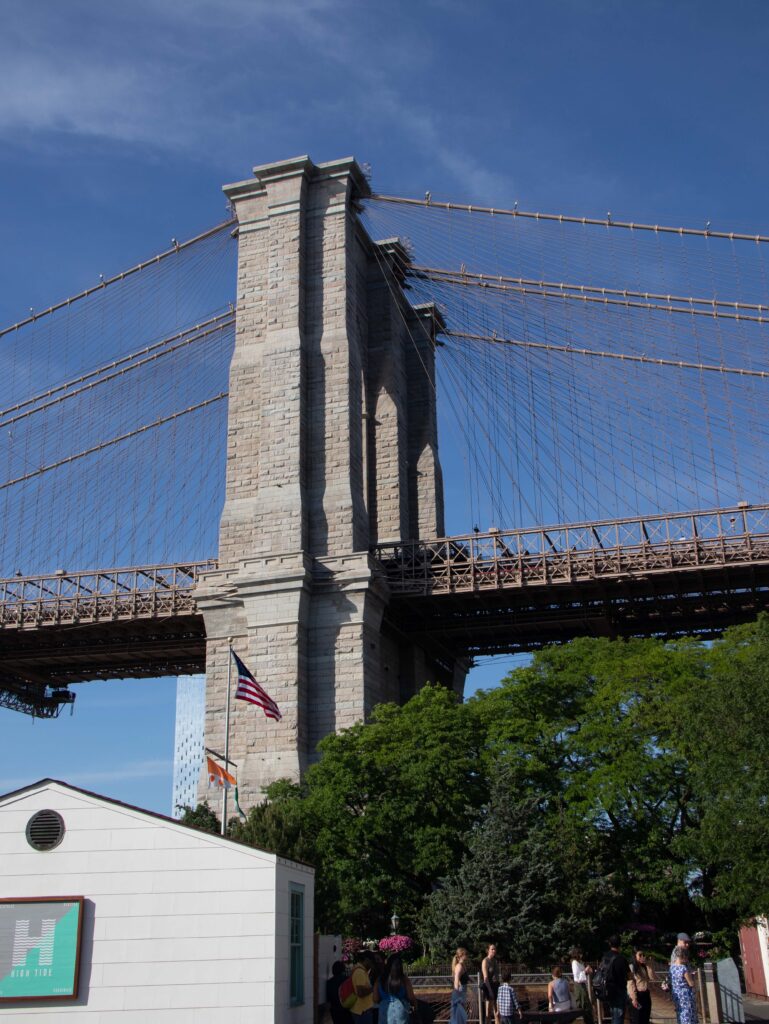
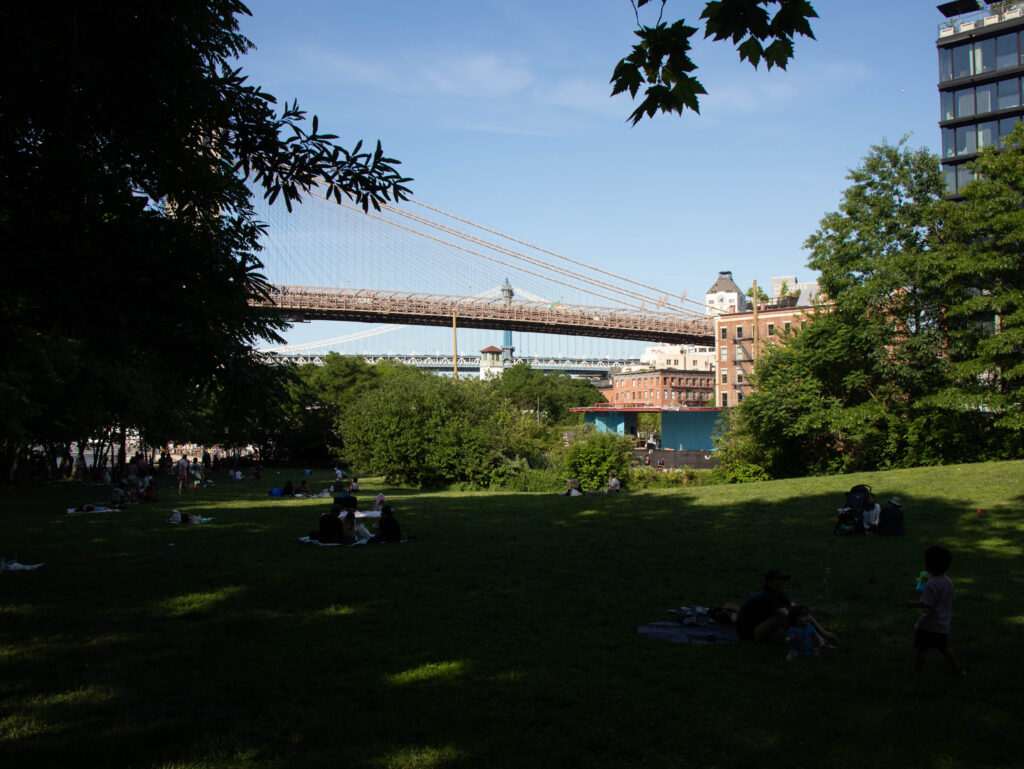
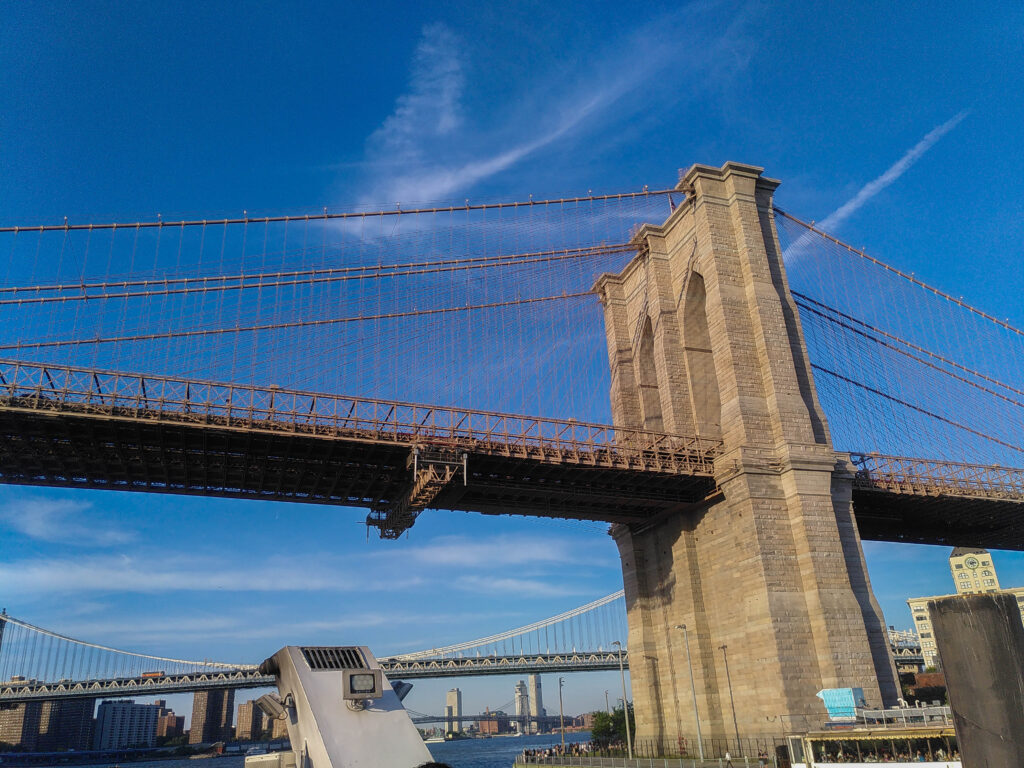
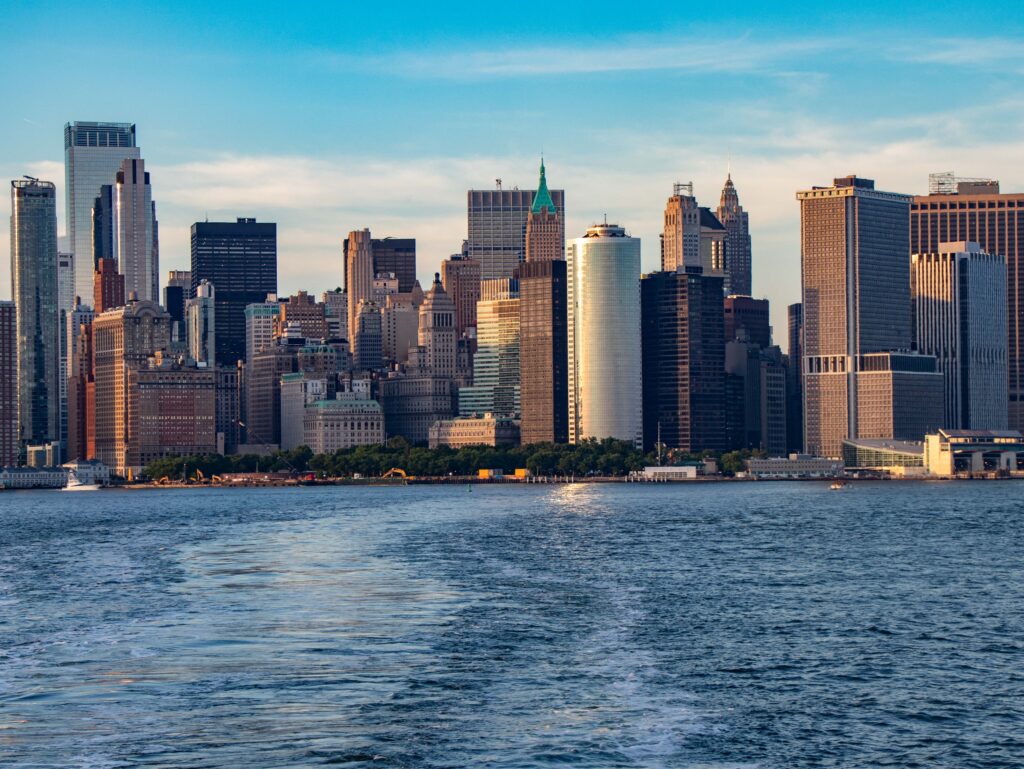
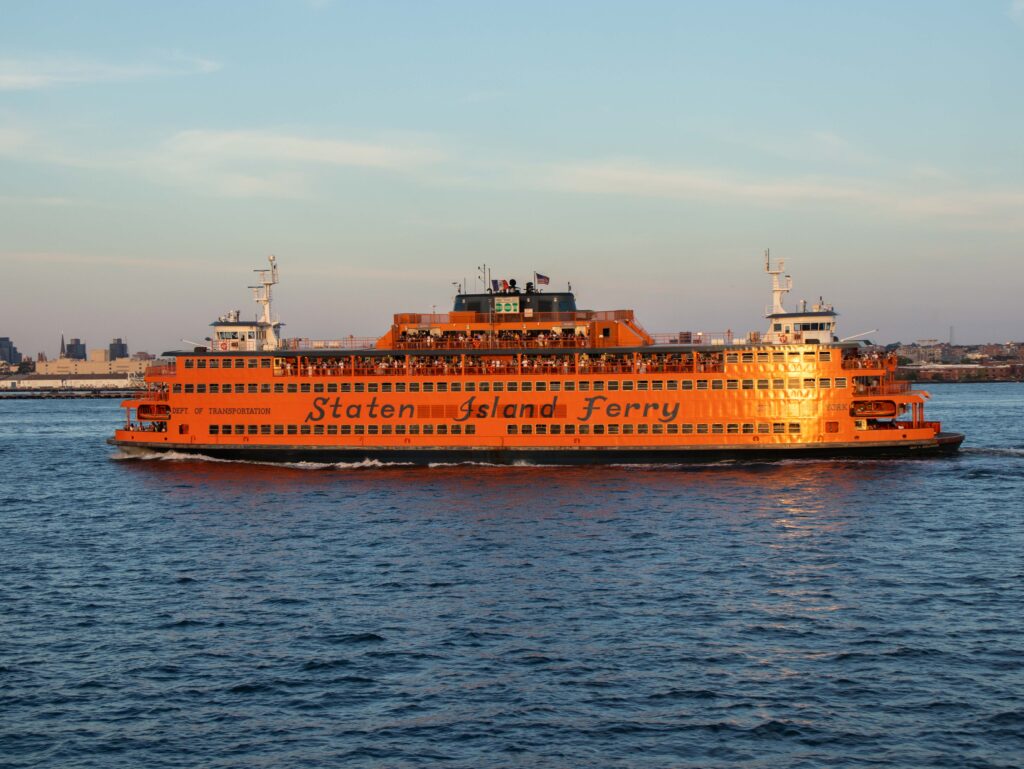
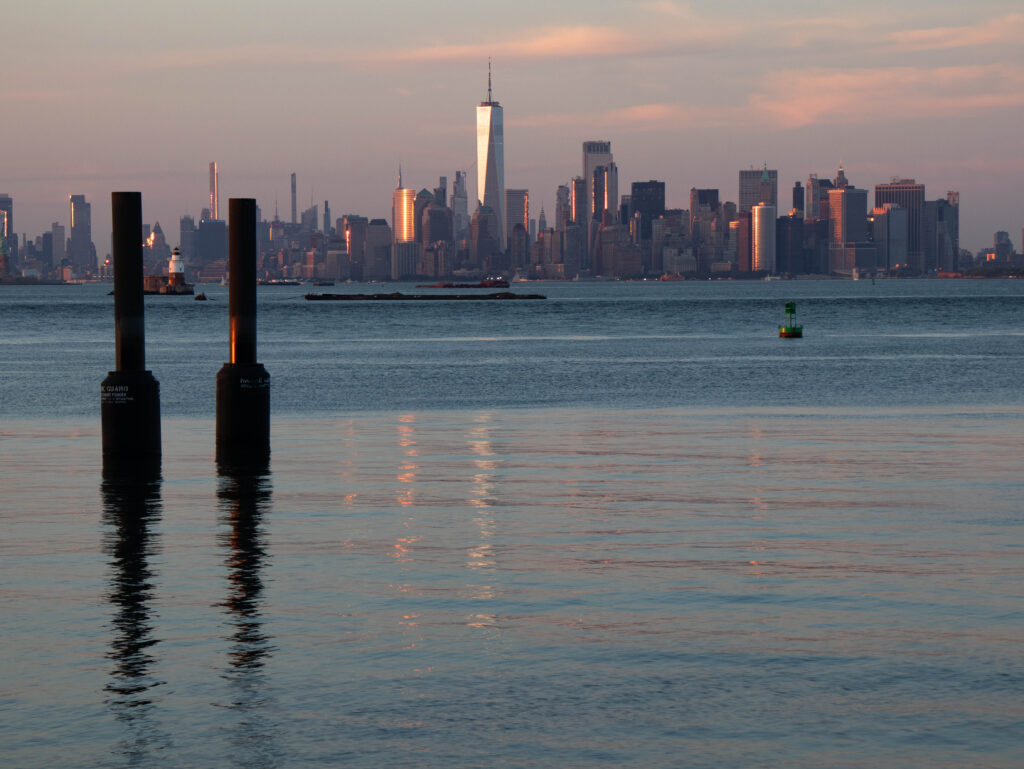
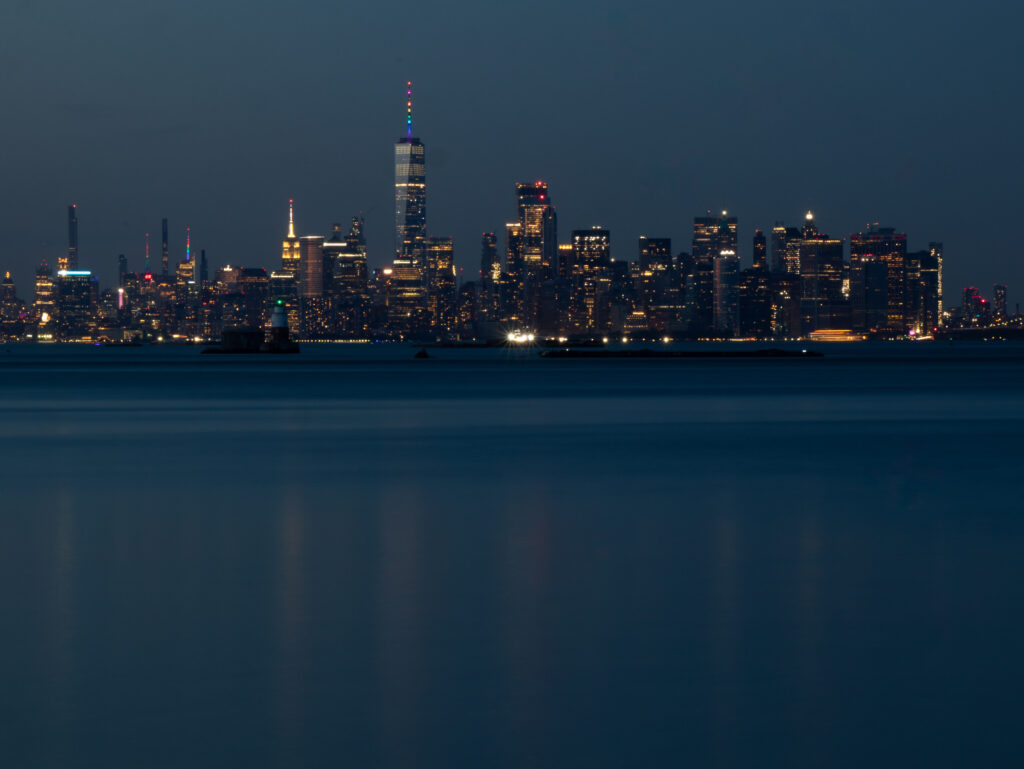
The bridge connects these two parts of New York City by foot, bike or car, but ferries still exist. The boats are a good way to admire the city with a little hindsight. That's what we did when we took a ferry from Brooklyn to the other bank. On the other side we took another ferry that took us to Staten Island. Ferries that connect with Staten Island are free of charge and have been set up to promote population settlement on the island. It is possible to borrow them on foot or by car. There are rotations every 20 minutes about, 24 hours a day. We took one of those boats at the end of the day to admire the sunset on New York. We landed on the island and settled on a bench on the esplanade. We didn't do it again, we took out our picnic and admired the show. We were not disappointed, the sun reflected on the buildings, it was beautiful. Gradually the natural light has been replaced by the artificial light of the city, which really changes its physiognomy. The return trip was by night and offered us a superb view of the illuminated skyline. Well, you have to put aside any green conviction and just enjoy the show, because it's also a big waste of energy all this.
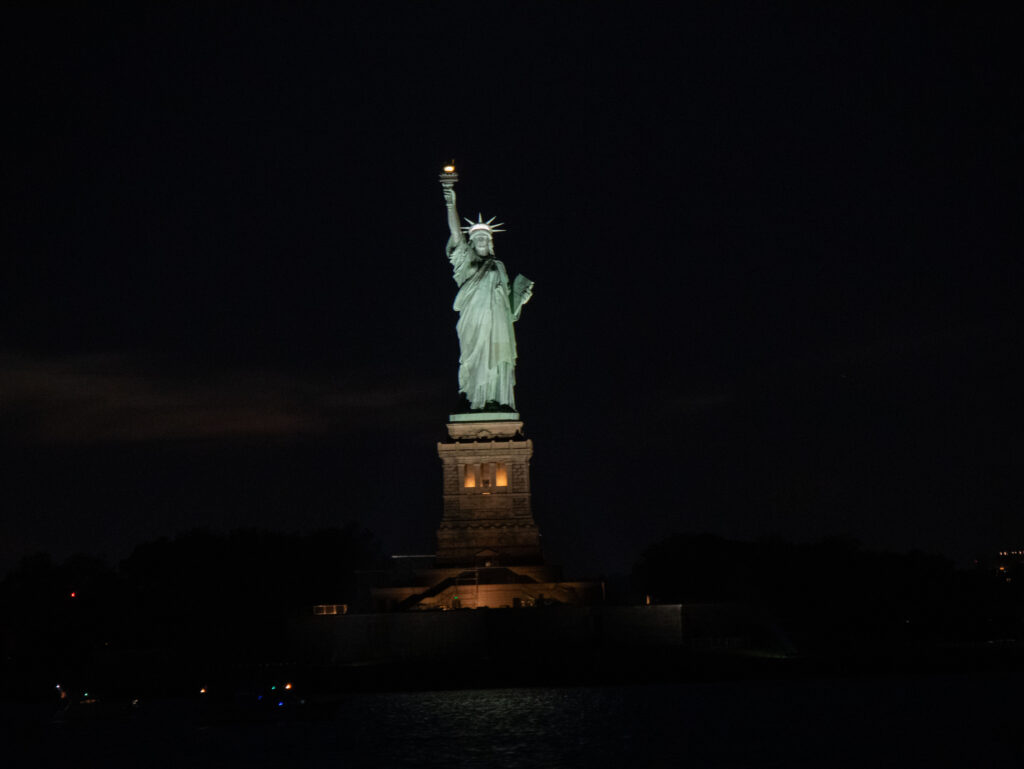
By the way, the Statue of Liberty greeted us friendlyly. When we arrived at the pier, we took the subway back to Jersey City.
Beautiful but tiring day, we are really not meant for so many cities!
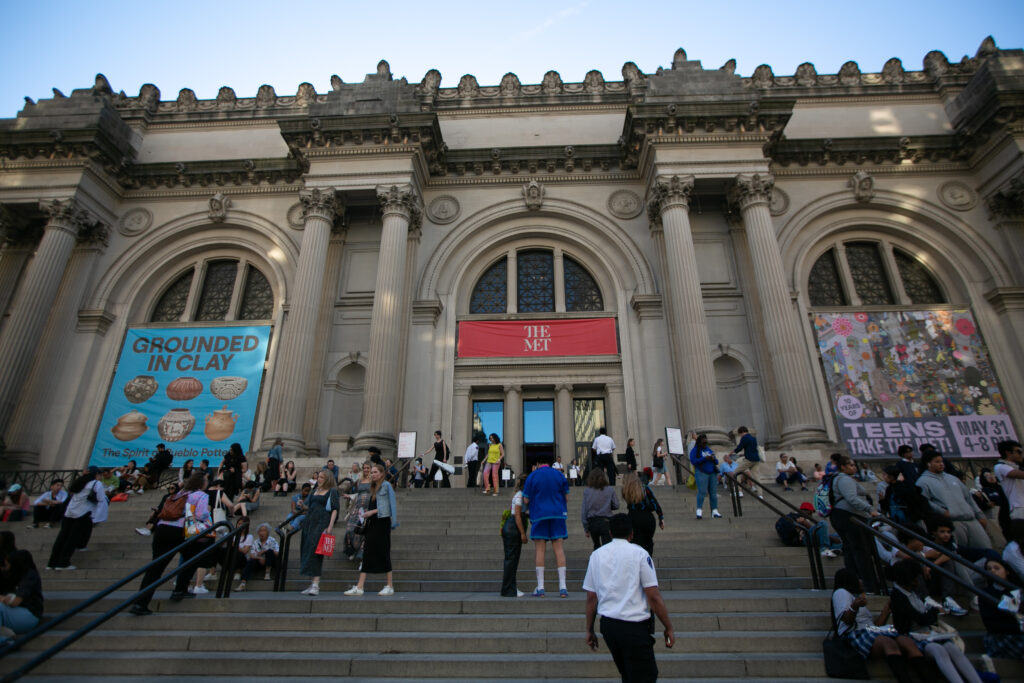
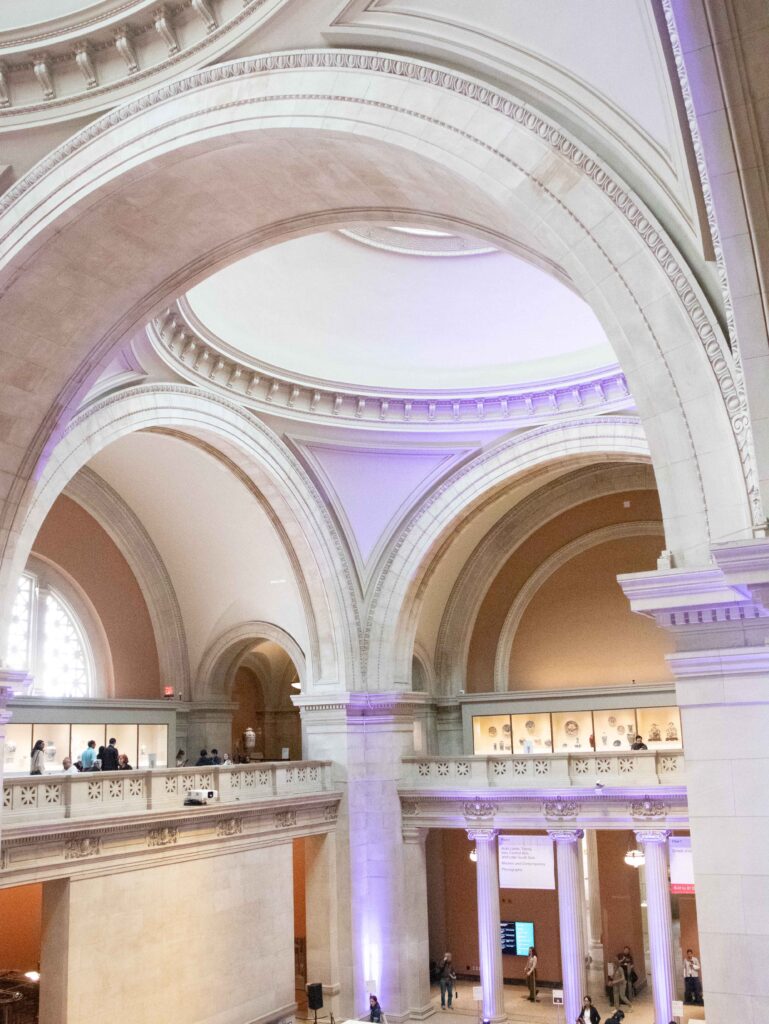
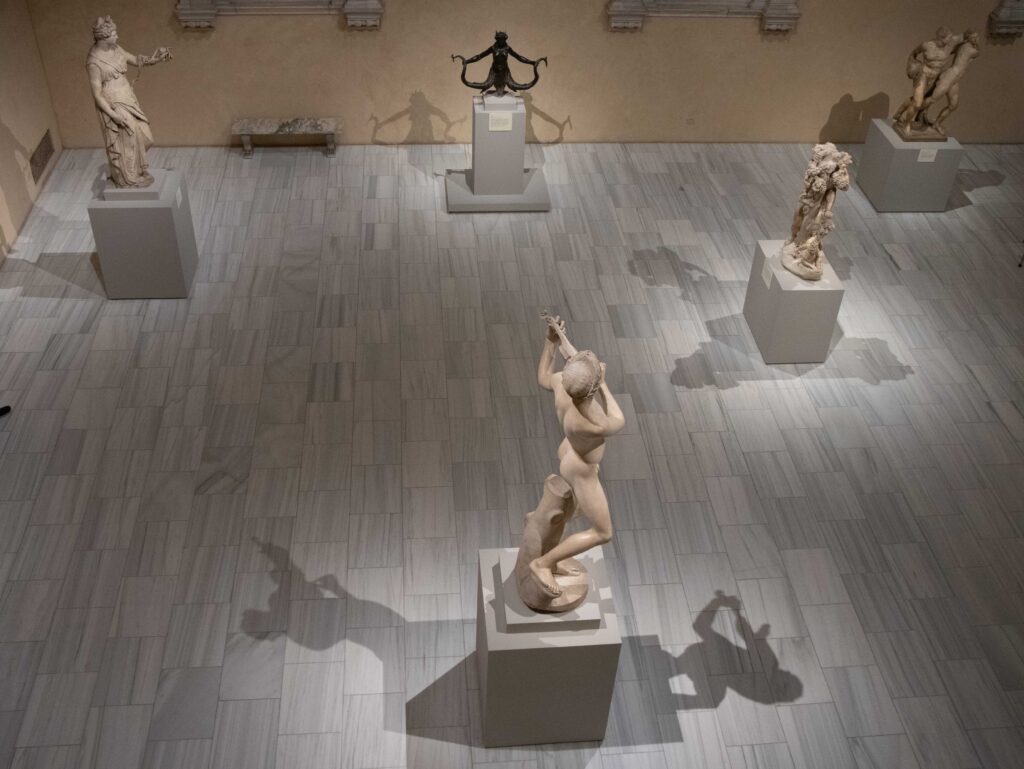
The next day, we went to Central Park again, first to visit the MET (Metropolitan Museum of Art), one of the world's largest museums after the Louvre. We had a couple of hours, as the Americans say, to visit this monument. Of course, this is not enough to go around, you have to choose the rooms to visit. We went to European painting from the 16th to the 19th century (Monet, Van Gogh... It gave us thrills!), passing through contemporary photography and 19th century advertising posters.
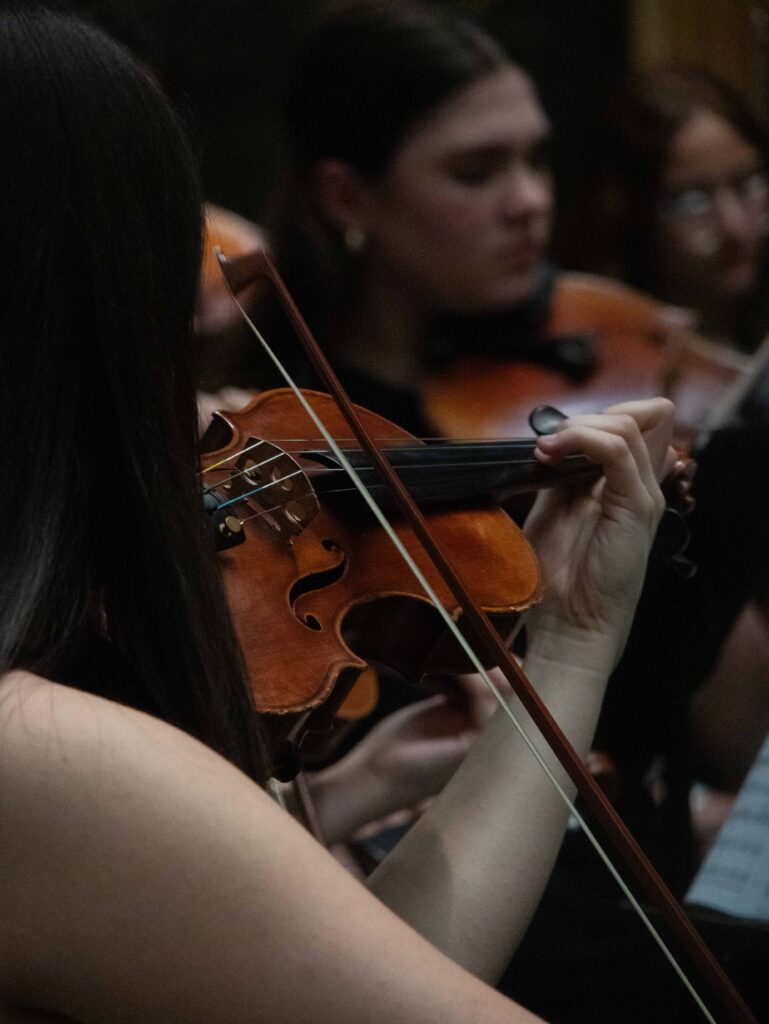
What was interesting, in addition to contemplation of works, is the contrast proposed with performances by contemporary artists. We were able to attend dance, a superb choir in the monumental staircase, classical music and a DJ.
The museum is about half of Central Park. On leaving we continued our visit. We landed at the edge of the reservoir Jacqueline Kennedy Onassis to admire the sunset. Like the day before, we took out the picnic to admire the sun's reflections on the buildings and the city that gradually passes in nighttime mode. Then it was time to go home, we had another hour of transportation to Jersey City.
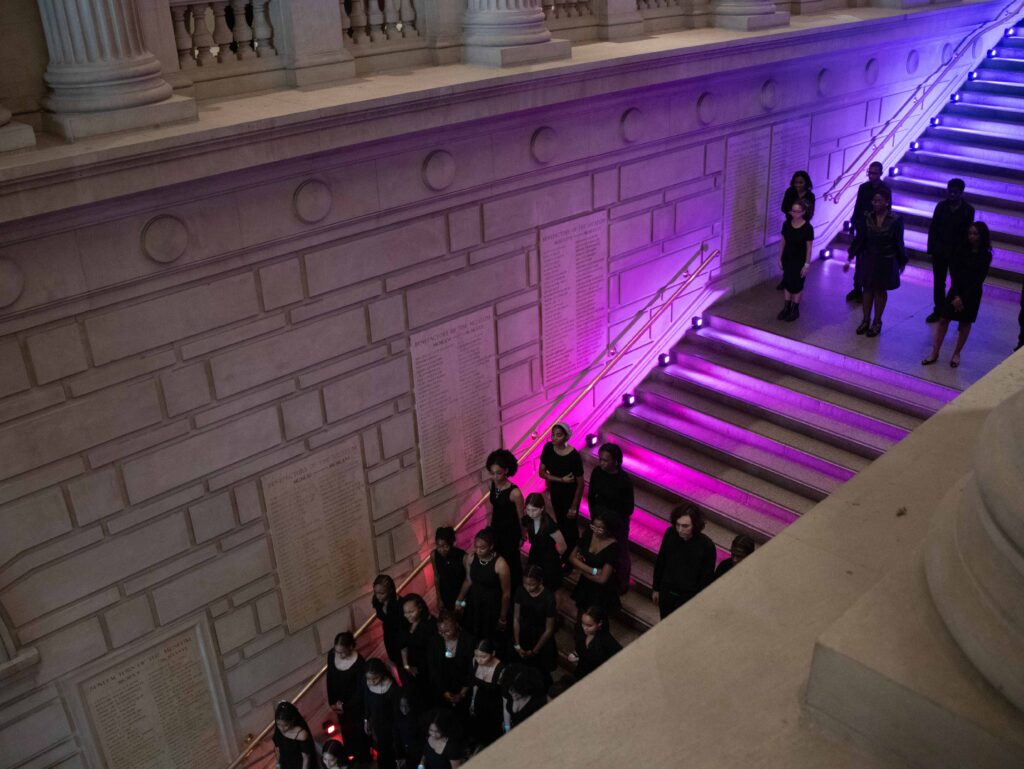
Sorry for the saturation on the end, the voices were too powerful. But we wanted to share this moment with you! There too a lot of chills listening to this choir.
The next chapters will take us to a more detailed visit to Central Park and the High Line and then, to be in tune with the news, we will talk about immigration with Ellis Island.

