Portland and its green streets
Initially, Portland was not part of our plans. We could imagine going through California. Our travel preparation, in addition to logistics and research, consisted of raising our English level to prepare our interviews. In discussing with Laura, our English teacher who comes from Portland, we were curious and went to see what this city could bring as a material to our journey. We were pleasantly surprised, because it is one of the most environmentally advanced cities, with Seattle, the United States. The city recycles 67% of its waste, with individual compost collection. It is cited as an example by many urban development-related corporations, and it is renowned for monitoring closely the development and quality of its urban planning.
One of the points that has drawn our attention is water management. In 1993, the city was prosecuted for violation of the « clean water act ».
In response to this event, Portland has developed integrated storm water management. The aim is to control the overflows of sewage treatment plants (such as Paris for the Olympics and swimming in the Seine), to regulate and filter rainwater. It should be noted that the climate in the region is very humid. It rains between 1000 and 1500 mm, with a rain distribution from October to May and a drier period from June to August. It is this annual amount of precipitation that allows the « rainforests » to develop.
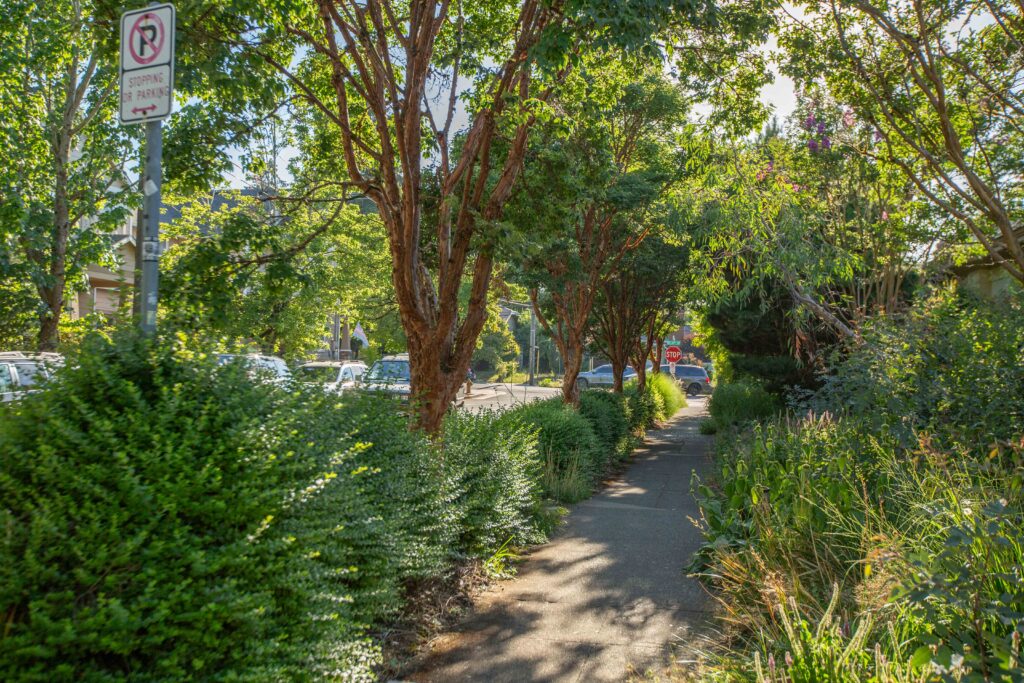
The programme envisaged for this purpose consisted of the creation of landscaped nudes, rain gardens and vegetated strips along the streets. The objectives of this approach were (Source: Quebec study published by the Ministry of Municipal Affairs and Spatial Planning):
– Reduce the volume of rainwater runoff in the sewer system,
– Reducing water pollution absorbed by groundwater,
-Reduce pollution of rivers and rivers caused by the rainwater spill,
-Reduce the frequency of flooding in the streets,
– Reduce costs associated with the construction of new sewer systems.
The results are very impressive: almost 3000 green streets have been built or renovated since 2003.
For information, by 2022 the city had 635,067 inhabitants on a surface of 376 km2, with a density of 1687 inhabitants/km2. By comparison, the city of Nantes is 323 204 inhabitants over 65 km2, with a density of 4958 inhabitants/km2.
Here are some results, according to 2012 data:
– Reduction of the flood peak over 25 years: 90% on average,
– Volume of containment of sewer overflows: 71%,
– Reduction of the discharge of polluted rainwater into the Portland river system,
– Creation of linear parks as secure traffic areas for pedestrians and cyclists,
– Increase of the surface of urban green spaces,
– Improvement of air quality and reduction of heat islands,
– General embellishment of the city and improvement of the quality of life of citizens,
– Reduction of the cost of upgrading the city's sewer system.
For example, the costs of replacing and renovating the sewer system in the territory covered by the project Tabor to the River estimated at 144 M$ US. The adoption of a mixed approach combining traditional infrastructure and green infrastructure has reduced these costs by 81 M$ US, not to mention the multiple environmental and social benefits. The five integrated rainwater management projects included in the 2017-2018 budget – combining the replacement or repair of sewer pipes and the establishment of green streets or other green infrastructure – have a positive cost-benefit ratio, estimated over five years.
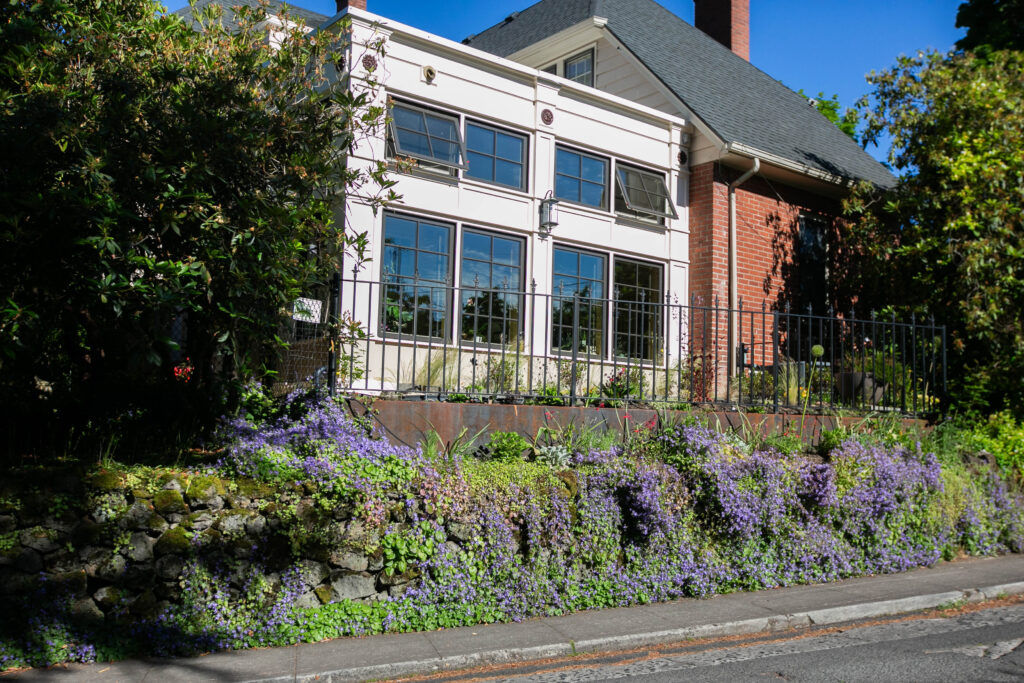
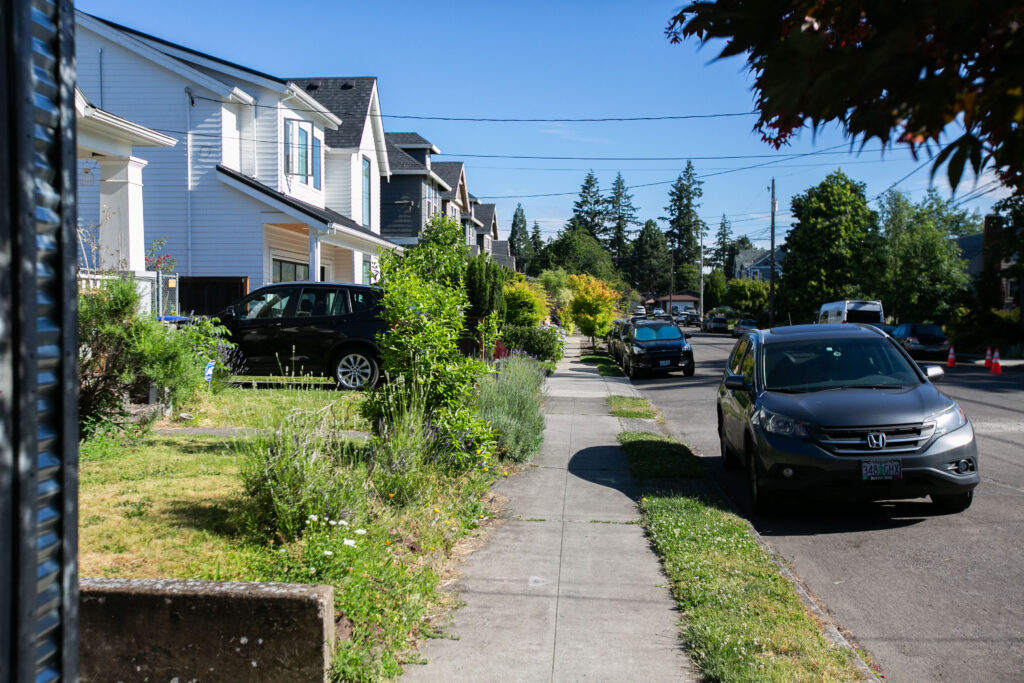
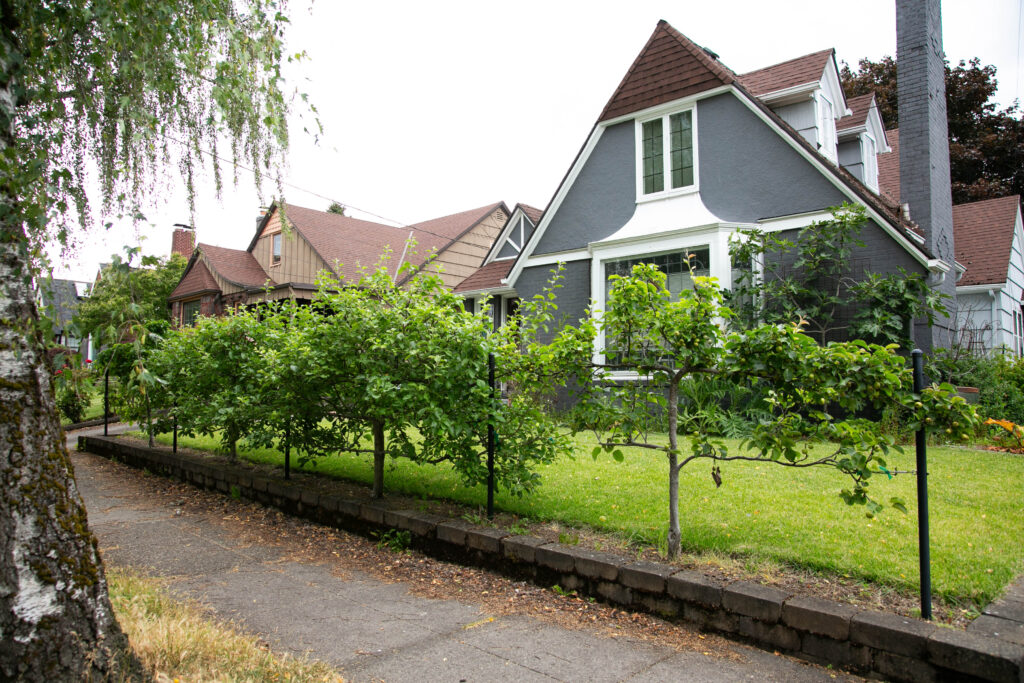

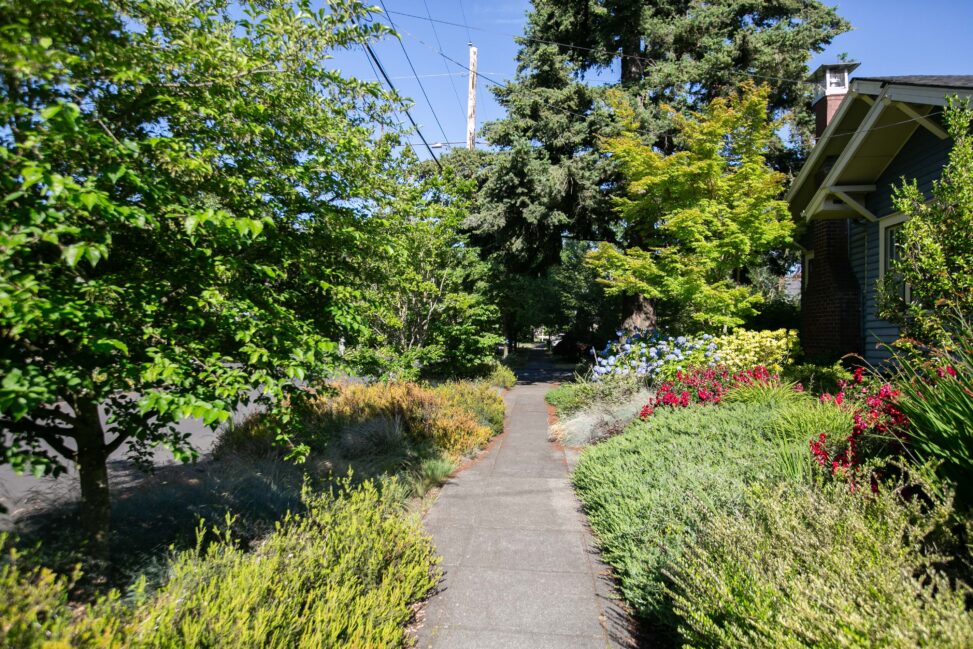
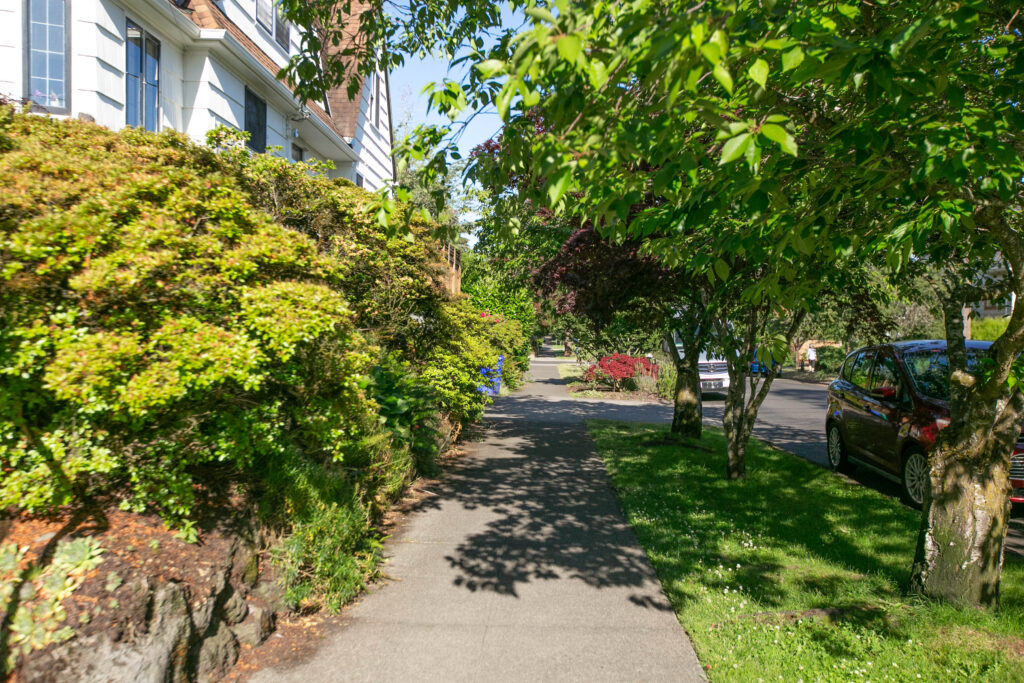
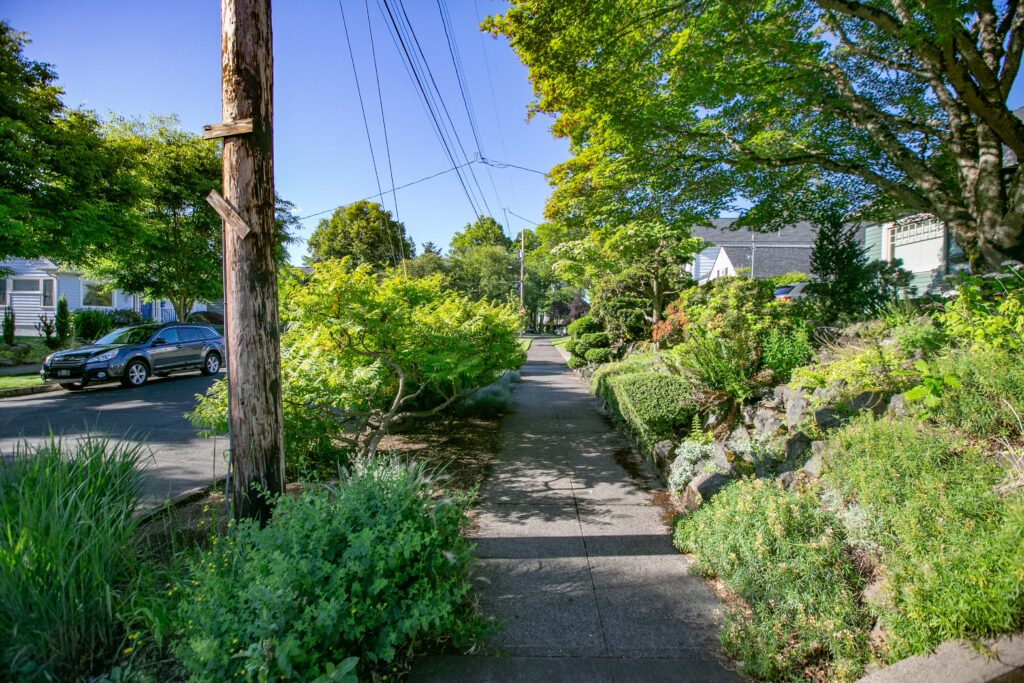
Sometimes we get what we want to say to the numbers and some programs can be coated with a nice green and biodegradable packaging. This is not the case in Portland: the work done is very impressive and is observed from the first steps in the streets. The amount of streets treated is not in common with what we have already seen. Citizens can also be involved in the vegetation of the public part of their home. There are no aesthetic instructions that are given, except for keeping the permeable surface. The whole is quite heterogeneous but very harmonious on the streets. The city's ocean climate allows a very rich plant palette to develop. The green streets offer many inhabitants the opportunity to extend their garden to the street, and it is not uncommon to see small vegetable gardens. When you're by, you walk through these gardens. The gardens on the public space being mostly open, the discussion is fairly easy with the inhabitants of the neighborhoods. The street where we stayed was itself a green street, very pleasant.
We surveyed a number of streets in different neighborhoods and each time the feeling was the same: we felt good, despite traffic and heat. You really saw the difference when you walked through a street that wasn't vegetated.
The city accompanies individuals in the development and offers a suitable list of trees to be planted in the various facilities. A tree census work in place through an online GIS (Geographic Information System) provides access to the names and characteristics of the city's trees.
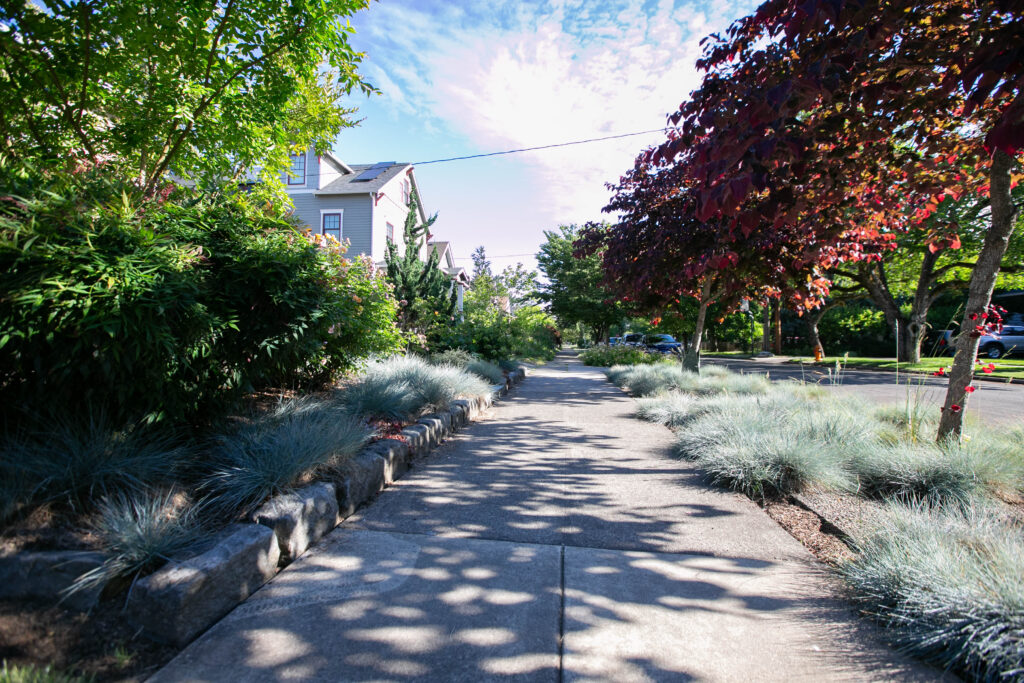
We also had the chance to meet two landscape architects from the city of Portland with whom we were able to discuss this work. They have provided us with a large amount of data that we will need to peel in more detail to get the real scope of work.
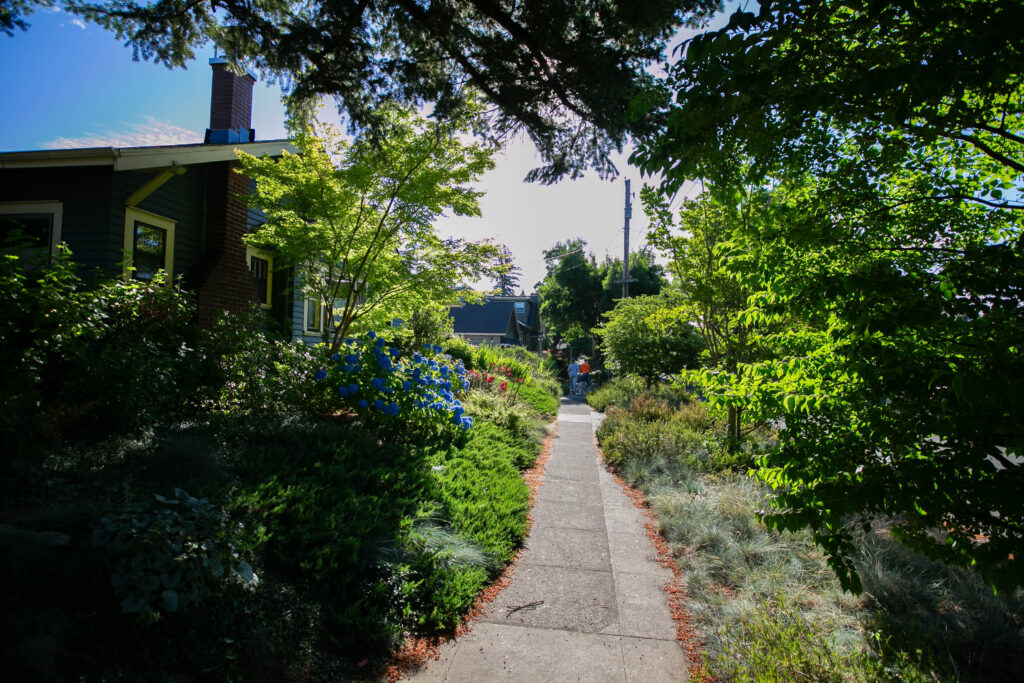
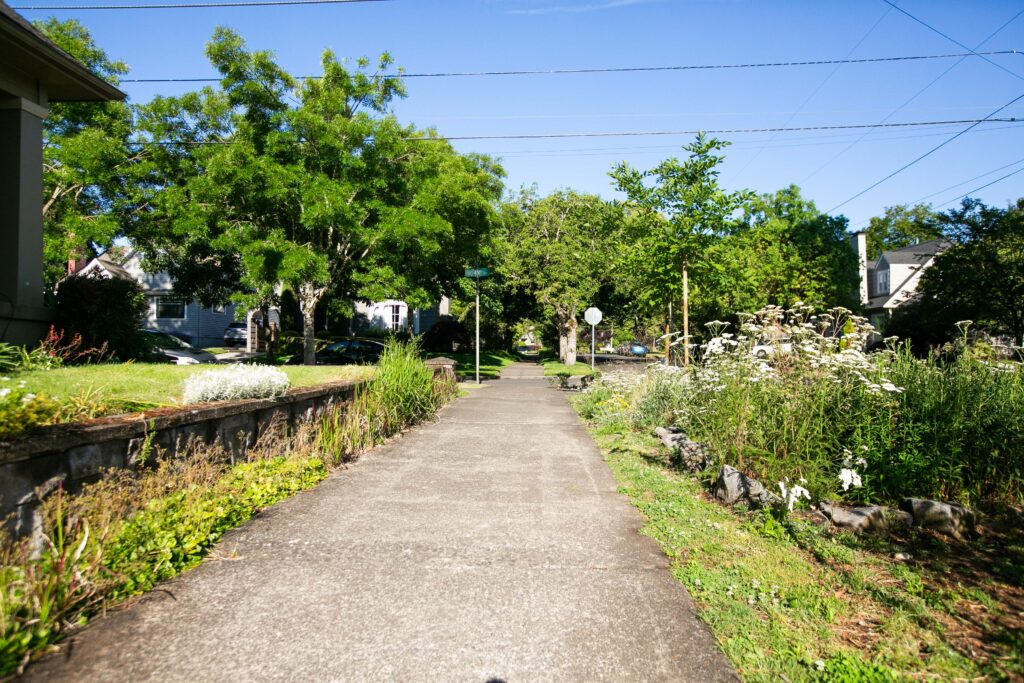
We spent a month in this city of Portland. We are not at all city dwellers and we were apprehensive about spending such a long time without having access to a piece of nature. Finally the stay passed by alone, the city being very vegetal, we managed to satisfy our needs in chlorophyll. People too are very welcoming, available, and we have observed a real empathy in the exchanges.
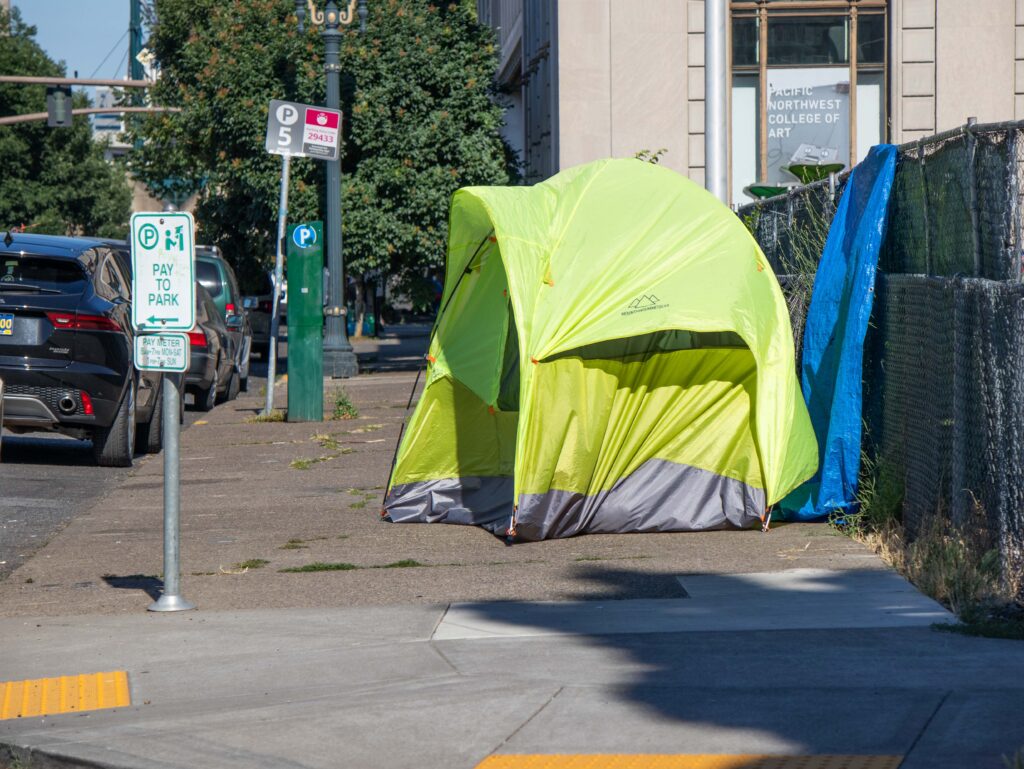
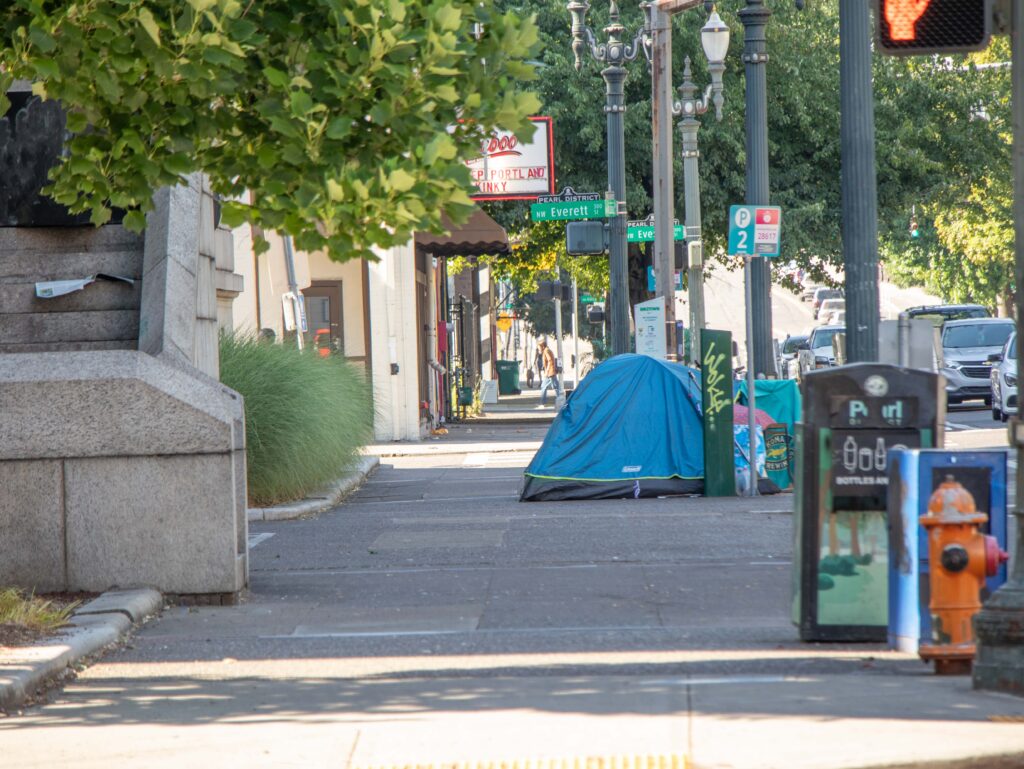
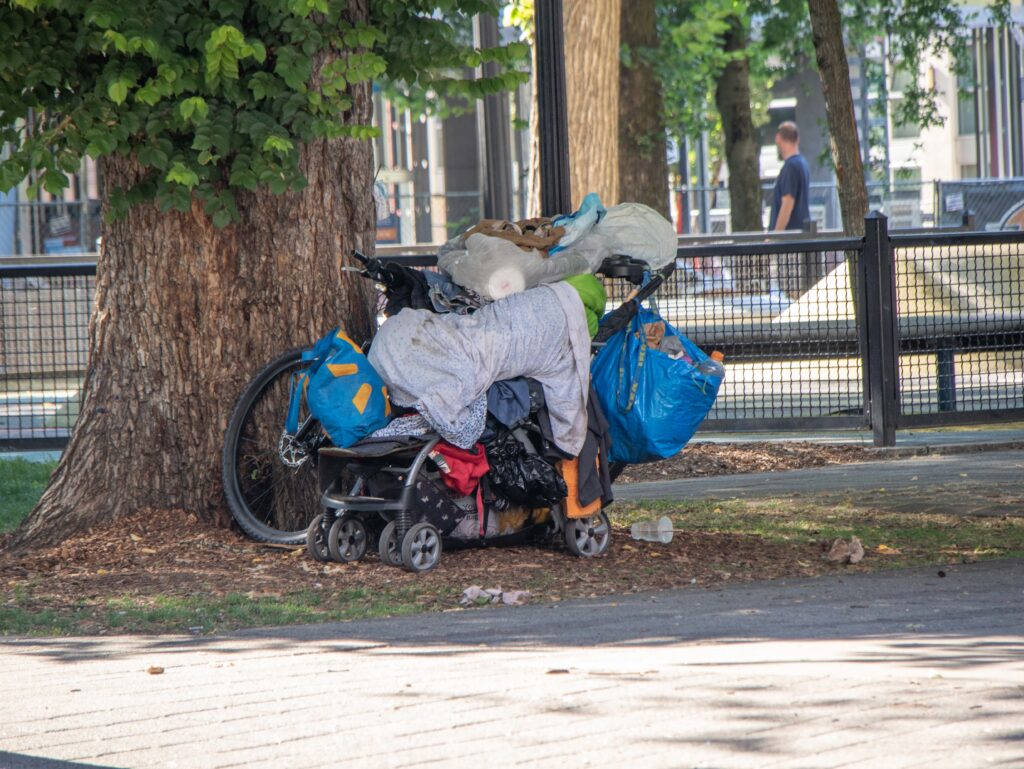
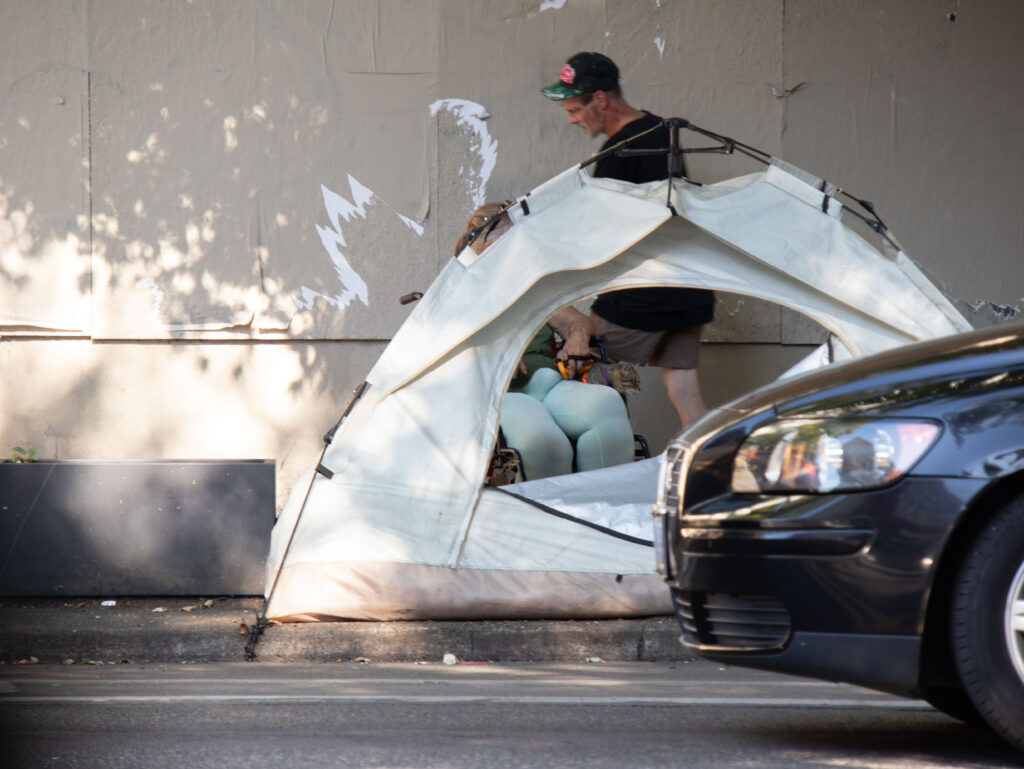
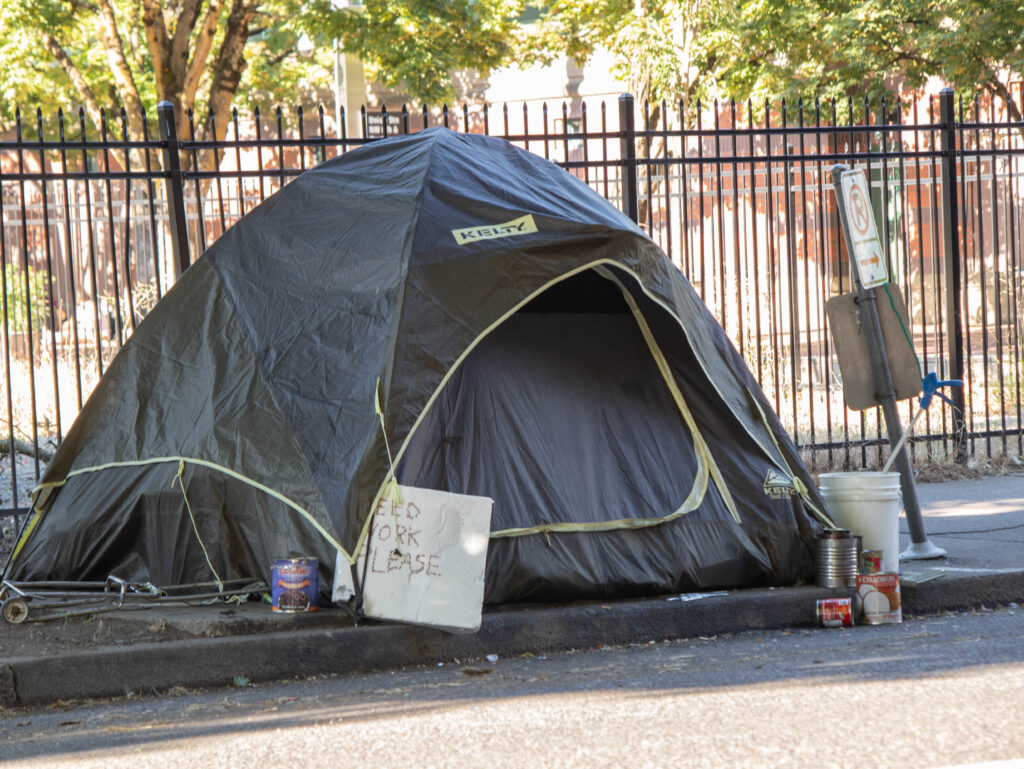
Despite all these good sides, there is another aspect of the city we wanted to witness. We had been warned that in recent years, as in other major cities, the presence of many people in distress added a feeling of discomfort. They live in tents, in the city centre, along motorways and disused land. In the case of Portland, this was reinforced by a bold law dating from 2020, decriminalizing the use and possession of hard drugs. Just a fine of 100$ which could be cancelled by calling a help number and engaging in a detoxification treatment. All this started with a good intention, to relieve prison congestion and adopt a more social than security policy, to the great damn of the Republicans. It was without counting on the appearance of synthetic opioids such as Fentanyl, which has pest effects. In 2024, in the face of the catastrophic results of this policy and under pressure from some influential democrats and Republicans, a law criminalizing hard drugs again was enacted to take control of the situation.
It is difficult to say whether the effects are already perceptible. Many people avoid the city centre, we ourselves have little frequented. We feel so powerless in the face of the distress of these people that we cannot move and ignore them. We wanted by these few photos not to forget them.